Zucchini Tartare with Parmesan, Capers and Dijon Mustard
Some classic dishes do not need to be imitated. Sometimes, all you need to do is borrow the idea and give it an entirely new character.
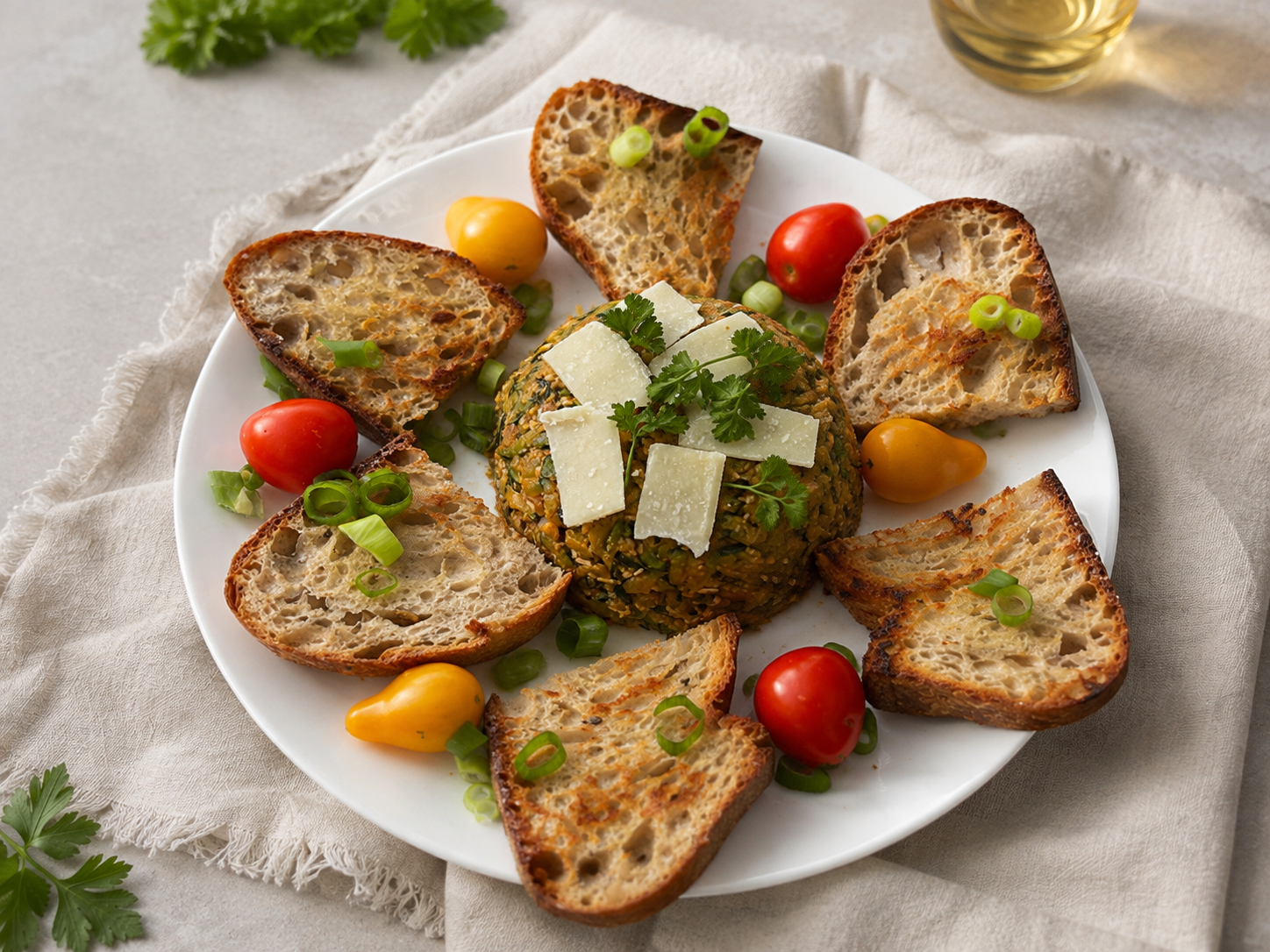
Zucchini Tartare with Parmesan, Capers and Dijon Mustard is a healthy, modern and safer take on classic beef tartare, replacing raw beef with one of summer’s most humble ingredients – zucchini.
The secret lies in how the zucchini is prepared. Instead of grating or boiling it, we cut it into small cubes and quickly sauté it in a very hot pan. This intensifies its flavor, creates subtle caramelized notes and, most importantly, allows the zucchini to retain a pleasant texture.
Dijon mustard, capers and Worcestershire sauce add piquancy and depth, lemon brings freshness, while Parmigiano Reggiano provides a distinctive umami character. A small amount of honey and balsamic vinegar creates a subtle sweet-and-sour contrast that brings everything together.
There is another welcome advantage. Since zucchini tartare contains no raw meat, you avoid the food safety concerns associated with traditional beef tartare. If you serve it without a raw egg yolk, all the main ingredients are either cooked or ready to eat.
Serve it with crisp toasted sourdough bread and, if you like, an egg yolk on top.
A familiar idea. An unexpected ingredient. No raw meat. A completely new kind of tartare.
Why This Recipe Works
- Quickly sautéing the zucchini removes some of its excess moisture while concentrating its flavor and creating subtle caramelized notes.
- Dijon mustard adds piquancy and acidity.
- Capers provide a distinctive salty and slightly tangy contrast.
- Worcestershire sauce brings the savory depth associated with classic beef tartare.
- Parmigiano Reggiano adds natural umami.
- Lemon juice brightens the entire dish and highlights the freshness of the zucchini.
- Honey and balsamic vinegar create a delicate sweet-and-sour contrast without making the tartare taste sweet.
- With no raw meat, it offers a simpler and safer alternative to traditional beef tartare.
- The result is a fresh, flavorful and surprisingly complex vegetable tartare.
Ingredients (2–3 servings)
- 1 large or 2 small zucchini
- 1 small shallot
- 1 tbsp capers
- 1 tsp Dijon mustard
- 1 tsp Worcestershire sauce
- 1 tsp extra virgin olive oil
- ½ tsp smoked paprika
- ½ tsp honey
- ½ tsp good-quality balsamic vinegar
- 1 small garlic clove
- 25–30 g Parmigiano Reggiano
- a few drops of fresh lemon juice
- freshly ground black pepper
- salt to taste
- fresh chives or parsley
Optional:
- 1 pasteurized egg yolk per serving
- a few shavings of Parmigiano Reggiano for serving
- toasted pine nuts
- a few drops of truffle oil
Instructions
- Wash and dry the zucchini, then cut it into small cubes, approximately 4–5 mm. Do not grate the zucchini – the small cubes create a much better texture for the tartare.
- Heat a large frying pan until very hot and add a small amount of olive oil.
- Sauté the zucchini over high heat for approximately 3–4 minutes. It should become lightly golden while remaining firm. The aim is to sear it rather than steam or cook it until soft.
- Transfer the zucchini from the pan and allow it to cool completely.
- Finely chop the shallot, capers and garlic.
- Add the shallot, capers, garlic, Dijon mustard, Worcestershire sauce and smoked paprika to the cooled zucchini.
- Add the honey, balsamic vinegar, a few drops of lemon juice and extra virgin olive oil.
- Add the finely grated Parmigiano Reggiano and gently mix everything together.
- Season with freshly ground black pepper and only then add salt if necessary. The capers, Parmesan and Worcestershire sauce already provide a considerable amount of saltiness.
- Finally, fold in the finely chopped chives or parsley.
- Refrigerate the zucchini tartare for approximately 15–20 minutes before serving to allow the flavors to come together.
- Using a serving ring or a small bowl, shape the tartare directly onto the plate and serve with toasted sourdough bread.
TGCC Tip
The key to exceptional zucchini tartare is controlling the moisture naturally present in zucchini.
Do not grate it. Cut the zucchini into small cubes and sauté them briefly in a properly heated pan. If the pan is not hot enough, or if you overcrowd it, the zucchini will begin to steam in its own juices, resulting in a soft and watery tartare.
If you are preparing a larger quantity, sauté the zucchini in two batches instead.
Our small TGCC flavor twist is the combination of honey and balsamic vinegar. Use both sparingly. Neither should be individually noticeable – their purpose is to create a subtle sweet-and-sour background that enhances the sautéed zucchini, Parmesan and capers.
For a more elegant presentation, place a pasteurized egg yolk on top of the shaped tartare. Once broken, it creates a naturally creamy sauce while making the connection to classic beef tartare even more apparent.
Serving Suggestions
- toasted sourdough bread
- grilled baguette or ciabatta
- Parmigiano Reggiano shavings
- fresh chives or parsley
- cherry tomatoes
- capers
- extra virgin olive oil
- freshly ground black pepper
- optional pasteurized egg yolk
Wine Pairing
Zucchini tartare pairs particularly well with fresh, dry wines with good acidity. They balance the olive oil and Parmesan without overwhelming the delicate flavor of the zucchini.
Recommended wines:
- Sauvignon Blanc
- Grüner Veltliner
- dry Riesling
The combination of zucchini, capers, lemon and Parmesan calls above all for freshness. Sauvignon Blanc complements the green and herbal notes, while Grüner Veltliner can beautifully echo the subtle peppery character of the tartare.
Recipe Details
Type: Appetizer / Light Main Course
Cuisine: Modern European / Mediterranean
Prep Time: 15 minutes
Cooking Time: 5 minutes
Resting Time: 15–20 minutes
Total Time: 35–40 minutes
Servings: 2–3
Difficulty: Easy