Roasted Radishes with Whipped Feta, Honey & Thyme
When radishes show their softer side
We mostly know radishes raw.
Crisp, fresh, slightly peppery.
On bread with butter. In a salad. Or simply with a pinch of salt.
But give them a few minutes in the oven and they reveal a completely different side.
Heat softens their characteristic sharpness, brings forward their natural sweetness and transforms their firm crunch into a tender texture that still retains a pleasant bite.
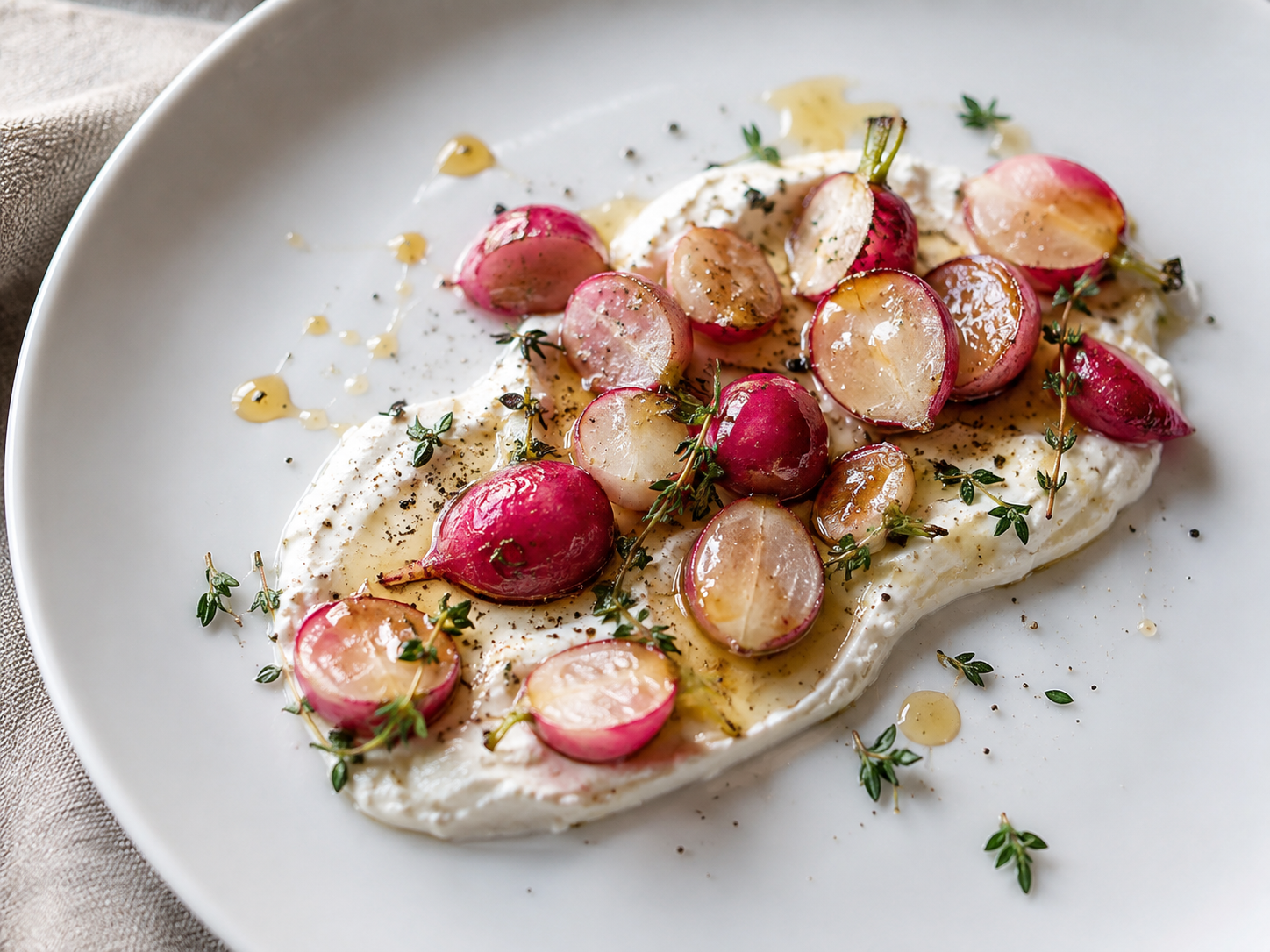
Add salty whipped feta, a little honey, thyme and lemon.
Five simple flavours.
One plate.
And that is exactly what seasonal cooking can be about.
WHY THIS RECIPE
Radishes are among the first vegetables that truly taste like a new season.
And yet we almost always eat them the same way — raw.
Roasting is a small change that makes a surprisingly big difference.
The radishes remain juicy while developing a gentler flavour. Feta brings saltiness and creaminess. Honey lightly highlights the natural sweetness that emerges during roasting, while lemon brings freshness back to the plate.
Thyme ties everything together.
Sweet.
Salty.
Fresh.
Creamy.
No unnecessary complications.
INGREDIENTS (2–3 servings)
- 2 bunches fresh radishes
- 150 g feta cheese
- 80–100 g thick Greek yogurt
- 1 tbsp extra virgin olive oil, plus a little for roasting
- 1 small knob of butter
- 1–2 tsp good-quality honey
- a few sprigs of fresh thyme
- 1/2 lemon
- freshly ground black pepper
- sea salt or flaky salt
Optional:
- a few very thin slices of raw radish
- young radish leaves
- finely grated lemon zest
METHOD
1. Radishes – the base
Preheat the oven to 200°C / 390°F.
Wash the radishes and remove most of the leaves. Keep a few young, fresh leaves for the final garnish if they look good.
Halve the larger radishes. Smaller ones can be left whole.
Toss them with a little olive oil and season very lightly with salt.
Roast for approximately 15–20 minutes.
We do not want to dry them out.
They should become tender and lightly golden on the cut side while still retaining some texture.
For the final 2–3 minutes, add a small knob of butter and a few sprigs of thyme.
2. Whipped feta
Add to a blender:
- feta cheese
- Greek yogurt
- olive oil
- a little fresh lemon juice
Blend until smooth and light.
Taste before adding any salt — feta usually provides enough on its own.
The aim is a delicate, slightly tangy cream that contrasts with the warm roasted radishes.
3. Finding the balance
Taste the radishes as soon as they come out of the oven.
Adjust with:
- a little flaky salt
- a few drops of lemon juice
- freshly ground black pepper
Honey comes last.
Not too much.
It should be an accent, not the main flavour.
4. Plating
Spoon the whipped feta onto a white plate and use the back of the spoon to spread it into a wide, irregular stroke.
Arrange the warm roasted radishes over the feta.
Finish with:
- a few drops of honey
- fresh thyme
- black pepper
- a little lemon zest
- optionally, thin slices of raw radish or young radish leaves
Do not try to fill the entire plate.
Give the ingredients some space.
THE SMALL DETAIL THAT CHANGES A RADISH
The characteristic peppery flavour of radishes is linked to glucosinolates — compounds also associated with other members of the brassica family, including mustard, cabbage and horseradish.
That is why we can recognise a certain flavour connection between them.
Once radishes are cooked, however, their sharp character becomes milder and their natural sweetness and delicacy become more noticeable.
That is why the first bite of a roasted radish can be surprisingly different.
It is still a radish.
Just from another point of view.
SERVING
This dish is best served while the radishes are still slightly warm, creating a contrast with the cool whipped feta.
Serve it as:
- a light starter
- part of a spring brunch
- a small plate with wine
- a side dish for grilled fish or chicken
And feel free to add a slice of toasted sourdough.
The feta, radish juices, honey and olive oil left on the plate are practically asking for it.
WINE PAIRING
Sauvignon Blanc – the fresh choice
Bright acidity works beautifully with both feta and lemon, while the wine’s herbal character naturally complements the thyme and fresh vegetable notes of the dish.
Look for a dry, mineral-driven style rather than an overly tropical Sauvignon Blanc.
Flavour profile:
- citrus
- green apple
- herbs
- minerality
Dry Rosé – a spring alternative
A delicate dry rosé pairs naturally with the subtle sweetness of roasted radishes and the small touch of honey.
Choose a wine with lively acidity and little or no noticeable residual sugar.
Flavour profile:
- red berries
- citrus
- gentle minerality
RECIPE DETAILS
Type: Starter / Small Plate / Seasonal Picks
Cuisine: Modern European
Prep time: 10 minutes
Roasting time: 15–20 minutes
Total time: approx. 30 minutes
Servings: 2–3
Main ingredient: Radish
Season: Spring / May
Perfect for: brunch, a light dinner, a small plate with wine