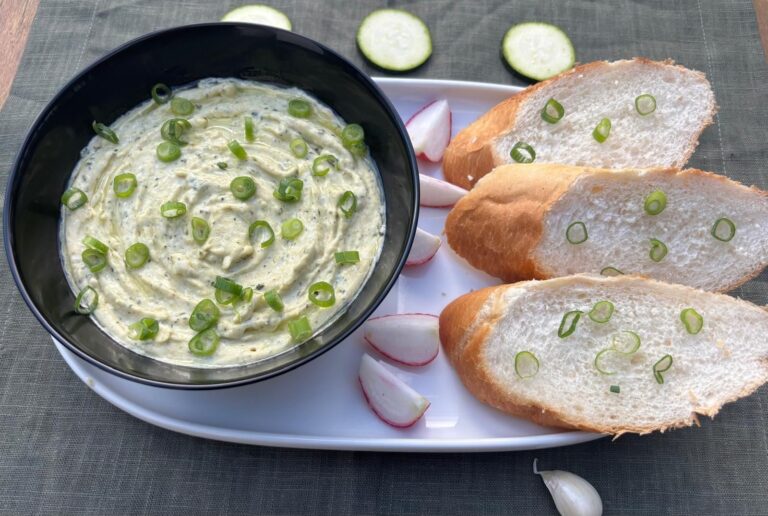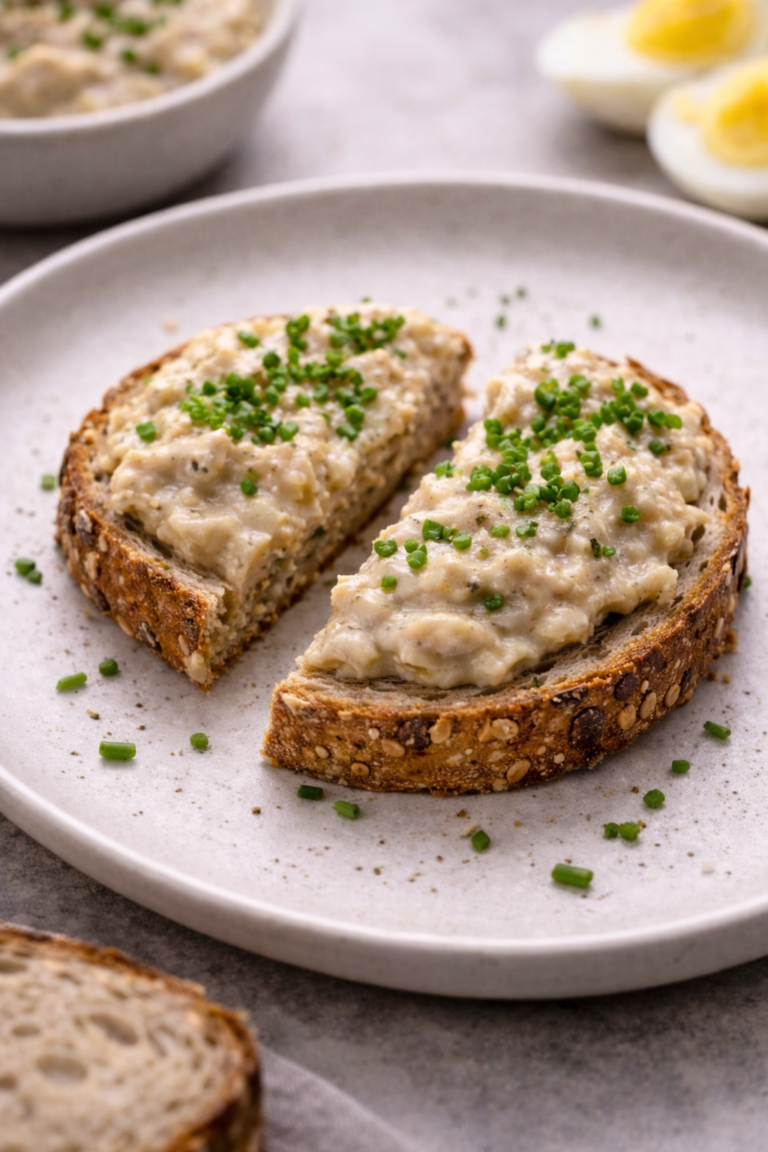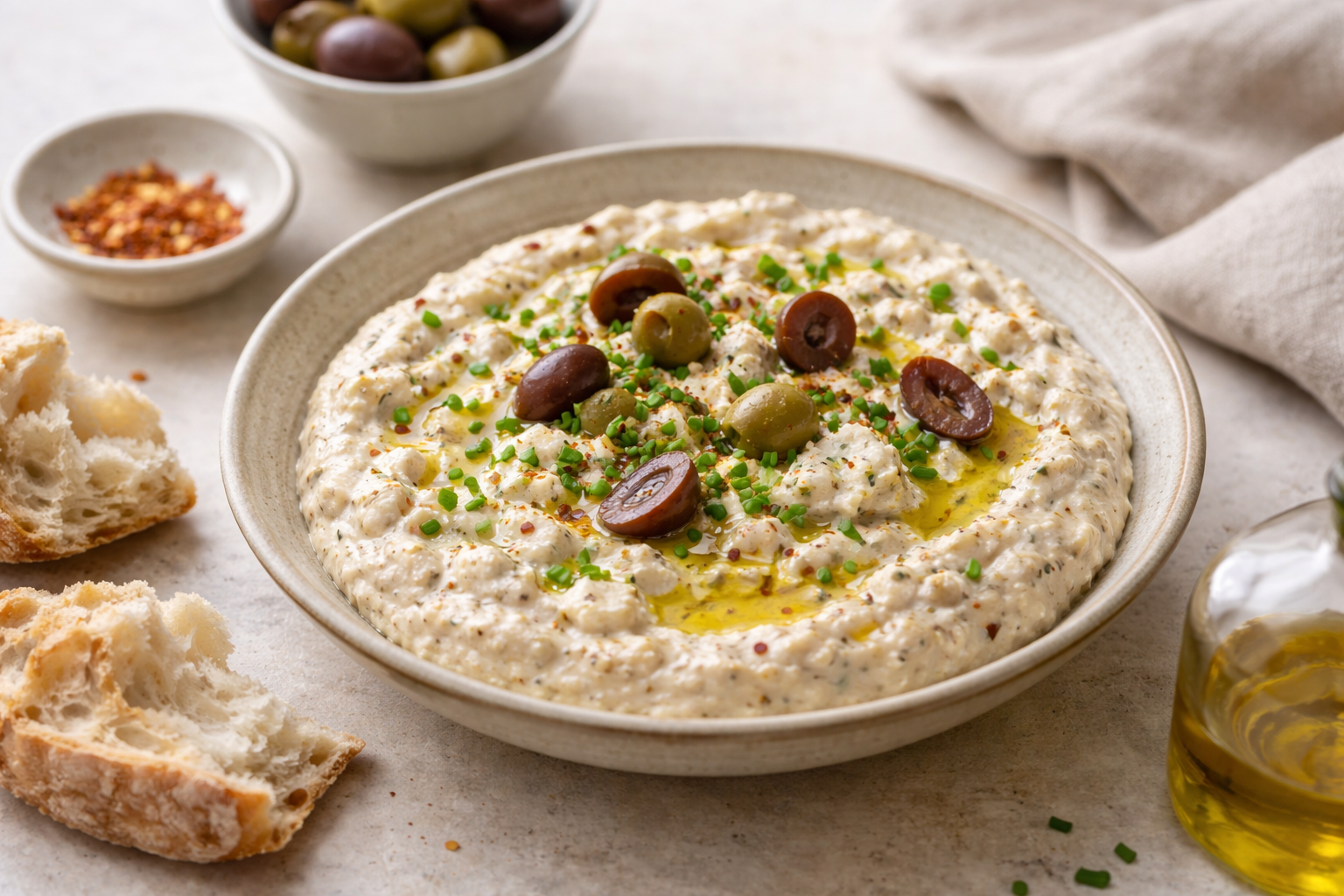
Roasted Cauliflower & Feta Greek Spread
Roasted cauliflower brings depth and warmth, feta adds gentle salinity, and yogurt softens everything into a calm, composed whole.
This is not a demanding spread.
It is slow-roasted, thoughtfully seasoned, and meant to be shared — without urgency.
WHY THIS DISH
Cauliflower has a rare quality — when roasted properly, it becomes both grounded and generous.
Here, it replaces heaviness with structure and lets the flavors build naturally.
Feta is not dominant.
It supports, sharpens, and then steps back.
This spread sits comfortably between mezze and comfort — familiar, but carefully restrained.
INGREDIENTS
For the roasted cauliflower
- 1 medium head of cauliflower, cut into florets
- 3 tablespoons extra virgin olive oil
- 1 clove garlic, finely minced
- ½ teaspoon ground cumin (lightly crushed)
- Onion powder, to taste
- Sea salt
- Freshly ground black pepper
For the spread
- ½ cup Greek yogurt (full-fat, thick)
- 100 g feta cheese
- 1 teaspoon extra virgin olive oil
- Juice of ¼ lemon
To finish
- Chili flakes (optional)
- Fresh chives, finely chopped
- Olives (Kalamata or mild green), sliced
METHOD
- Preheat the oven to 220 °C (430 °F).
- Spread the cauliflower florets on a baking tray.
- Drizzle with olive oil and season with garlic, cumin, onion powder, salt, and pepper.
- Roast for 25–30 minutes, turning once, until golden and deeply aromatic.
- Let the cauliflower cool slightly — warm, not hot.
- In a food processor, combine the roasted cauliflower, feta, lemon juice, and olive oil.
- Blend until coarse and textured, not fully smooth.
- Add Greek yogurt gradually, blending until creamy but still structured.
TGCC NOTE
This dish is about restraint.
Nothing here should dominate — not the feta, not the garlic, not the spice.
It’s meant to be returned to, not consumed all at once.
WINE PAIRING (TGCC)
This dish works best with wines that are:
- dry
- defined by clean acidity
- unoaked or very lightly oaked
- mineral or gently creamy in character
Avoid aromatic excess and heavy, showy oak.
A dry Welschriesling (Rizling vlašský) can be a very good choice.
Restraint matters more than intensity.
RECIPE DETAILS
- Difficulty: Easy
- Serves: 6–8 (as a shared spread)
- Season: All year
- Texture: Creamy, softly structured
- Flavor profile: Roasted, gently saline, citrus-bright
- Style: Mediterranean cellar food, restrained
- Best served: Slightly chilled, after resting
- TGCC Category: Morning Grounding