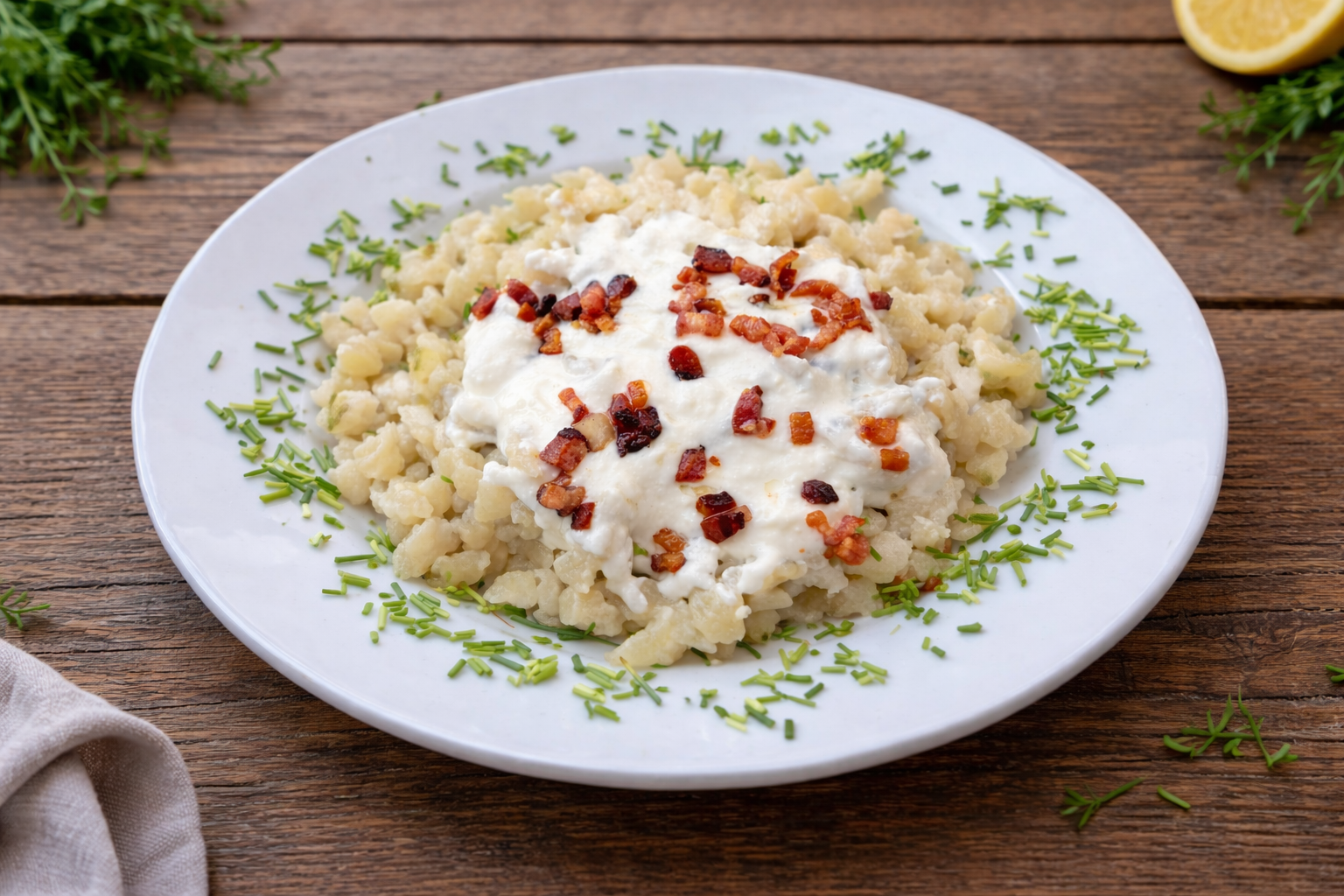
Bryndza Dumplings in the Time of Ján Babilon
Long before bryndza dumplings became something to be named, they existed simply as food.
Not a recipe to be written down, but a way of cooking understood without explanation.
In the mid-19th century, Ján Babilon wrote about dumplings, strapačky, and flour- and potato-based dishes, while bryndza appeared as a separate ingredient.
Their combination was present, practical, and unremarkable — because it was already part of everyday cooking.
This is not an attempt to reconstruct an exact historical recipe.
It is an attempt to understand how this dish came into being — quietly, through habit, season, and necessity.
WHY THIS DISH
This dish did not emerge from celebration or intention.
It came from what was available, affordable, and necessary.
Potatoes, flour, salt, and bryndza were part of everyday rural life.
Combined, they created a meal that was filling, reliable, and quietly sustaining.
In Babilon’s time, such combinations required no special attention.
They belonged to the rhythm of the kitchen, not to the pages of a defined recipe.
THE RECIPE
INGREDIENTS
- wheat flour
- raw potatoes
- salt
- fresh sheep’s bryndza
- butter or lard
- smoked bacon (optional, but common)
METHOD
- Raw potatoes are finely grated. Excess liquid is pressed out, but never completely — the dough should remain moist and alive.
- Flour and salt are added to form a soft, heavy dough that barely holds together.
- The dough is not cut with a knife. It is pressed or thrown directly into boiling, salted water.
- Once the dumplings float to the surface, they are cooked briefly and then drained.
- While still hot, they are mixed immediately with bryndza, which melts on its own without cream or enrichment.
- Butter or lard is added, and smoked bacon if desired.
There was no egg in the dough.
Not because anyone made a rule of it — but because the dish never asked for one.. : )