
Bistro Suvlaki – When Slovak Fried Cheese Meets Its Greek Cousin
Every Slovak knows vyprážaný syr – our classic fried cheese. But what about its Greek cousin?
That question led us to Bistro Suvlaki on Krížna Street in Bratislava, a small Greek bistro with a simple interior, Greek music and a menu that goes well beyond the familiar gyros and souvlaki.
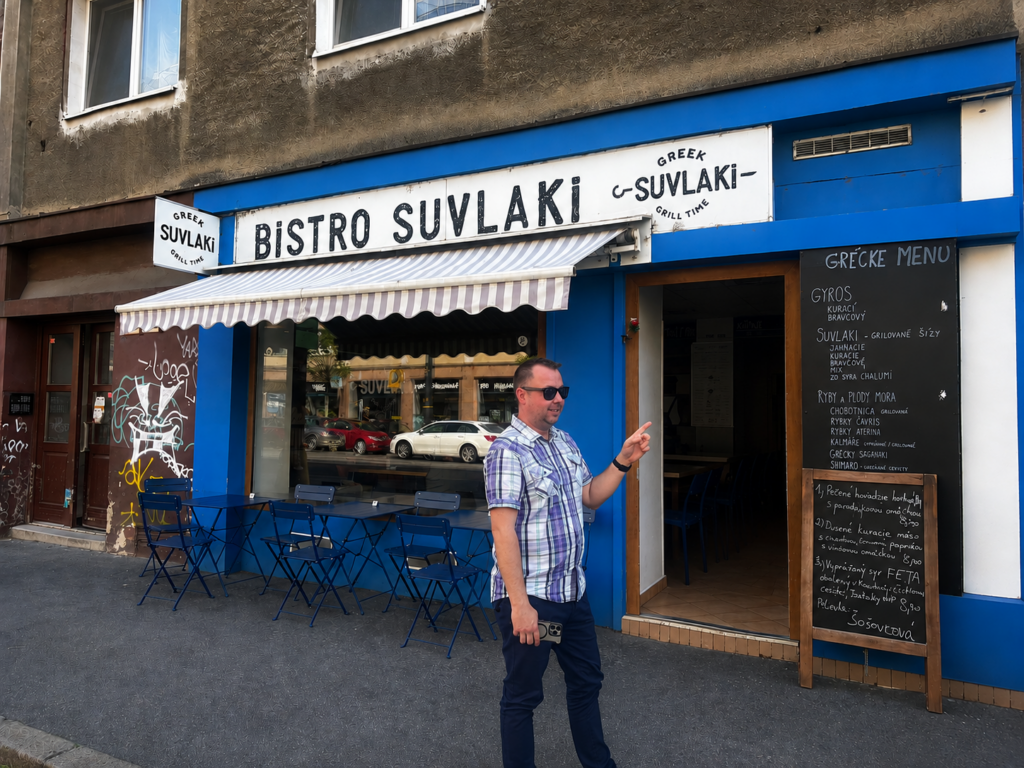
At first glance, there is no doubt about the cuisine. A blue-and-white façade, a Greek menu written on a board and simple outdoor seating. This isn’t fine dining – it’s an informal place for honest Greek food.
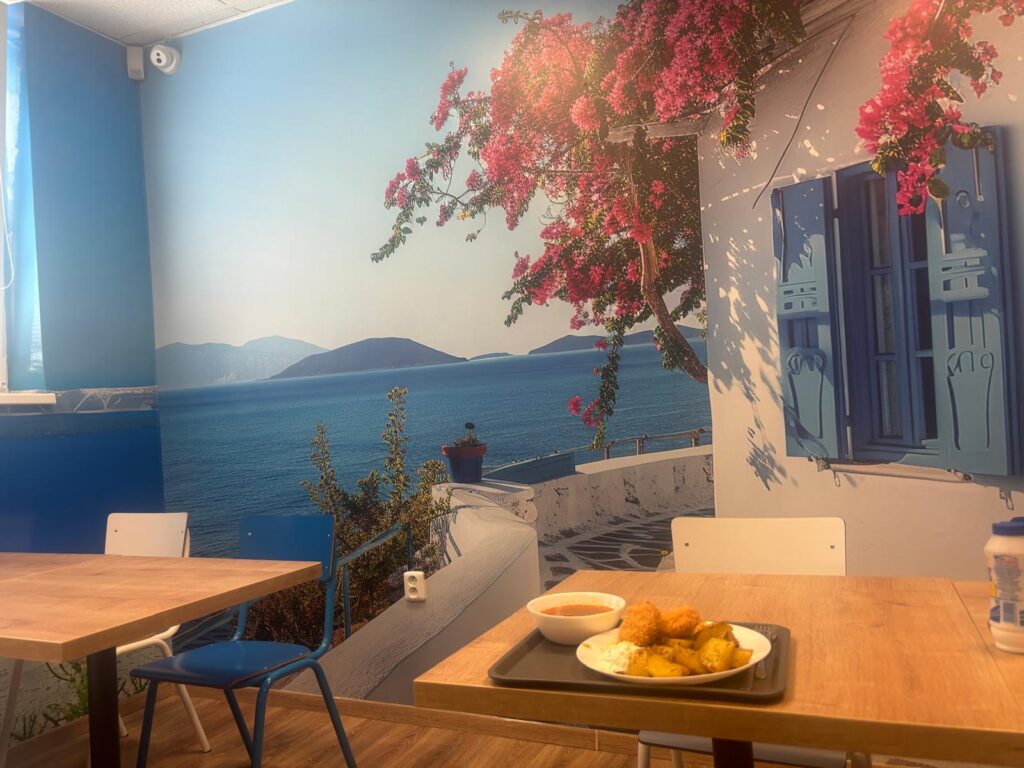
The interior continues the Greek theme. A large Mediterranean scene with a white house, blue shutters, the sea and bougainvillea may not quite turn Bratislava into a Greek island, but it certainly fits the character of this small bistro.
When Fried Cheese Gets a Greek Passport
One dish on the lunch menu immediately caught my attention: fried feta wrapped in kataifi, served with homemade tzatziki.
And this is where lunch becomes interesting from a culinary perspective.
Kataifi is a pastry made from extremely fine, thread-like strands of dough. It is widely used in Greek and Eastern Mediterranean cooking, particularly for desserts, but it also works remarkably well in savoury dishes. When fried, the delicate strands create a light and exceptionally crispy exterior.
And that makes a lot of sense with feta.
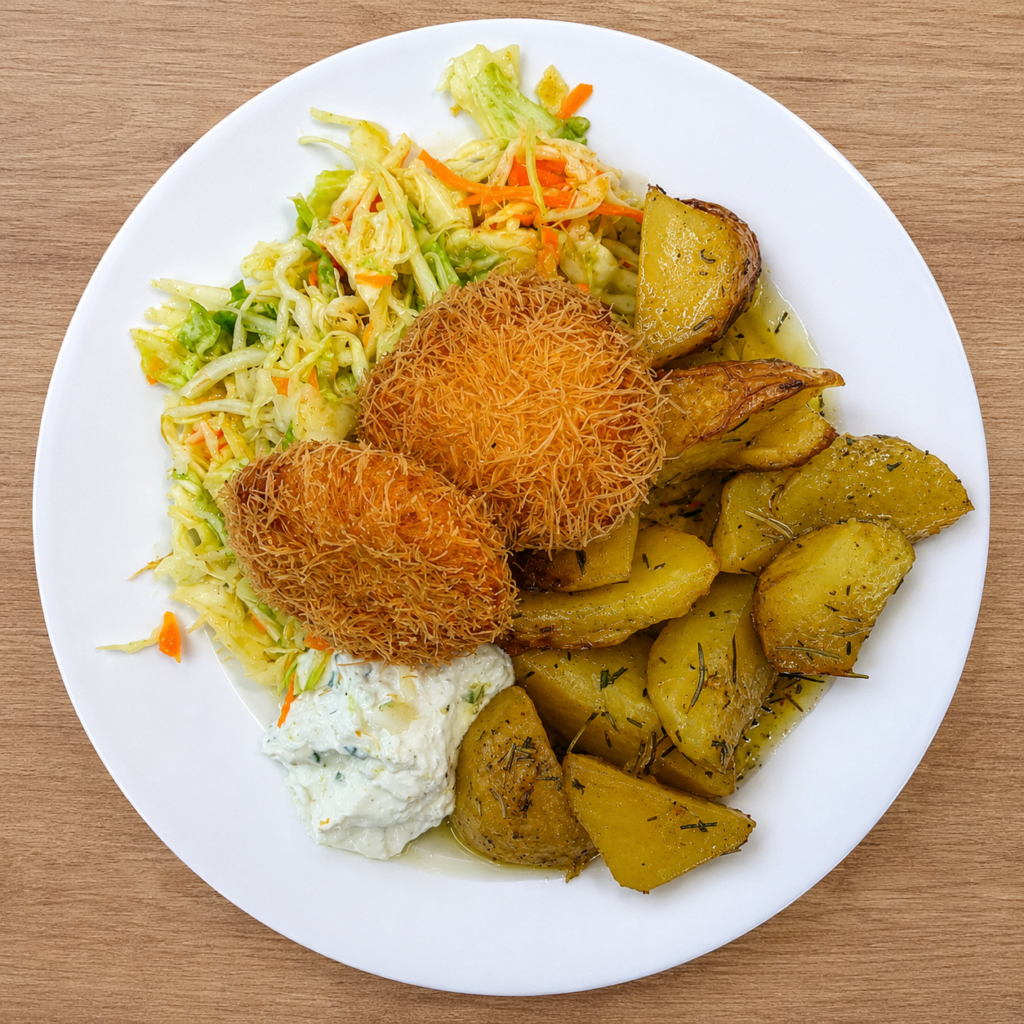
Feta behaves very differently from the cheese typically used for Slovak fried cheese. It is saltier, tangier and much more pronounced in flavour. When heated, it softens but doesn’t turn into the almost molten centre we associate with our breaded fried cheese.
The result is therefore a completely different interpretation of “fried cheese”: bold, soft feta inside and exceptionally crisp kataifi on the outside.
The homemade tzatziki works exactly as it should. The yoghurt and cucumber bring freshness and balance both the saltiness of the feta and the richness of the fried coating.
Slovak Fried Cheese vs. Greek Feta in Kataifi
The similarity really comes down to one basic idea:
cheese + crispy coating + hot oil.
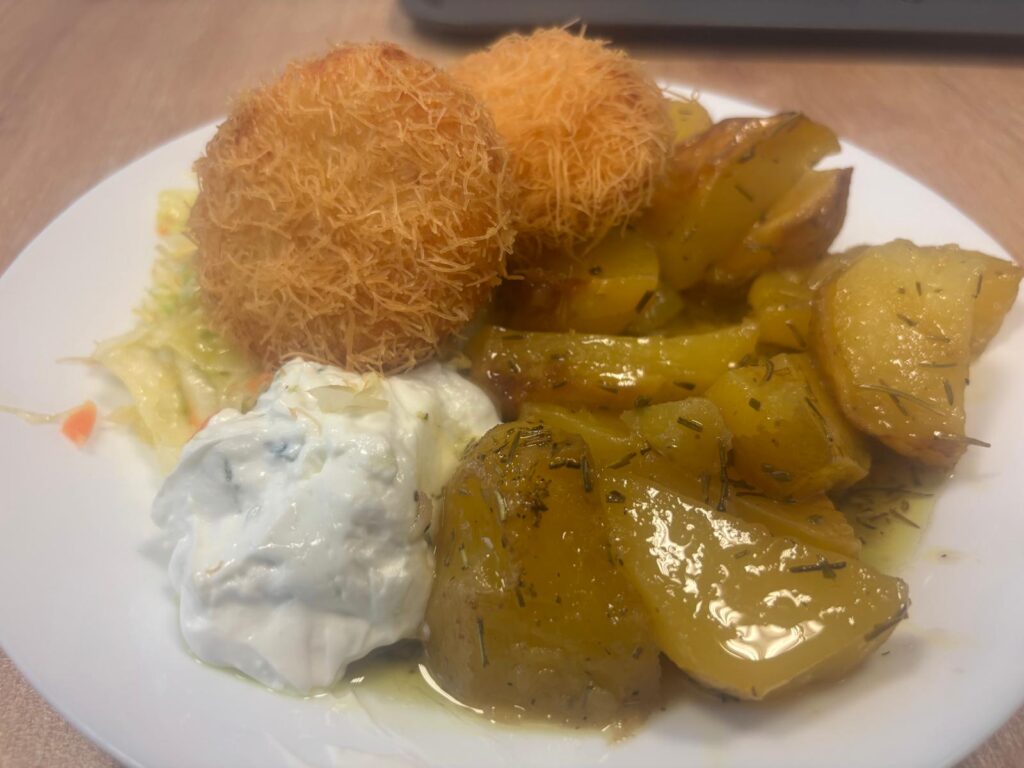
The Slovak version usually relies on a mild semi-hard cheese coated in the classic combination of flour, egg and breadcrumbs. The Greek version we tried was much bolder in flavour, while the fine strands of kataifi created a lighter but extremely crisp texture.
Instead of tartar sauce, you get tzatziki.
And it works extremely well.
Our feta was accompanied by herb-roasted potatoes, salad and soup. At the time of our visit, the entire lunch menu cost €8.90, making the combination of quality, portion size and price a very pleasant surprise.
What Else Is Worth Trying?
Bistro Suvlaki isn’t built around gyros alone. We also spotted souvlaki, halloumi, fish and seafood, calamari and octopus on the menu, leaving plenty of room to explore some less familiar sides of Greek cuisine.
This time, however, we found a dish that was worth the visit on its own.
TGCC Tip
Their Greek-style roasted potatoes are also well worth mentioning. They may look like a simple side dish, but they were excellent – soft and tender inside, lightly roasted on the edges and full of Mediterranean herb flavour.
A classic Greek way of preparing potatoes, known as patates lemonates, relies on a simple combination of olive oil, fresh lemon juice, garlic and oregano. Unlike ordinary roasted potatoes, they are not cooked completely dry. As they roast, they slowly absorb the seasoned liquid, giving them a wonderfully tender centre and their characteristic lemony, herby flavour.
An easy version to try at home: for approximately 1 kg (2.2 lb) of potatoes, use 4–5 tbsp olive oil, the juice of 1 lemon, 2–3 garlic cloves, oregano, salt, black pepper and around 100 ml (⅓–½ cup) of water or stock. Roast at 190–200°C (375–390°F) for about 50–60 minutes, turning them at least once during cooking.