
Spier 1692 – When a Wine Tasting Tells the Story of a Place
Some wineries stay with you because of a particular bottle. Others because of the view, the cellar, or a wine you know you would happily return to.
And then there are places where, only later, you realise that the best part of the visit was none of those things on its own.
Spier 1692, near Stellenbosch, was exactly that kind of place.
It was one of the stops on our journey through South Africa, and we arrived expecting, above all, some good wine. Instead, we found ourselves spending a few hours in a place where landscape, people, food and wine seemed to come together naturally.
Perhaps that is why we still remember this tasting so well.
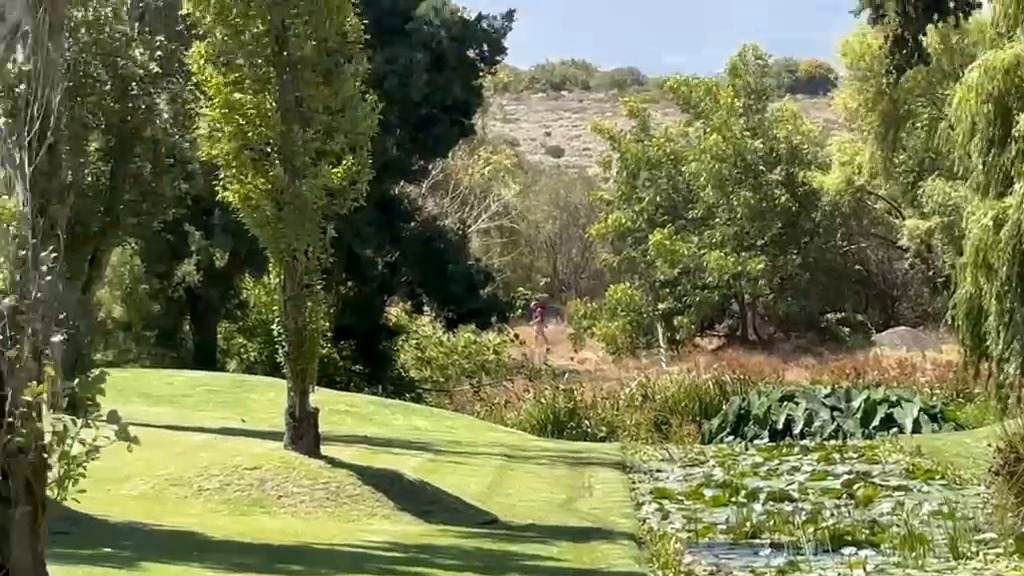
A Corner of Stellenbosch Where There Is No Need to Rush
Spier is not the kind of place you simply pass through.
Greenery, water, old trees, white buildings and the distant outline of the mountains quickly persuade you that the next item on the itinerary can wait for a while.
The landscape itself offers part of the explanation for what makes South African wines so interesting. Sunshine and warmth meet the cooler influences coming from the coast.
There is a rather romantic way of describing wines from this part of South Africa: wines shaped between two oceans.
Standing here, it does not sound quite so romantic.
It simply begins to make sense.
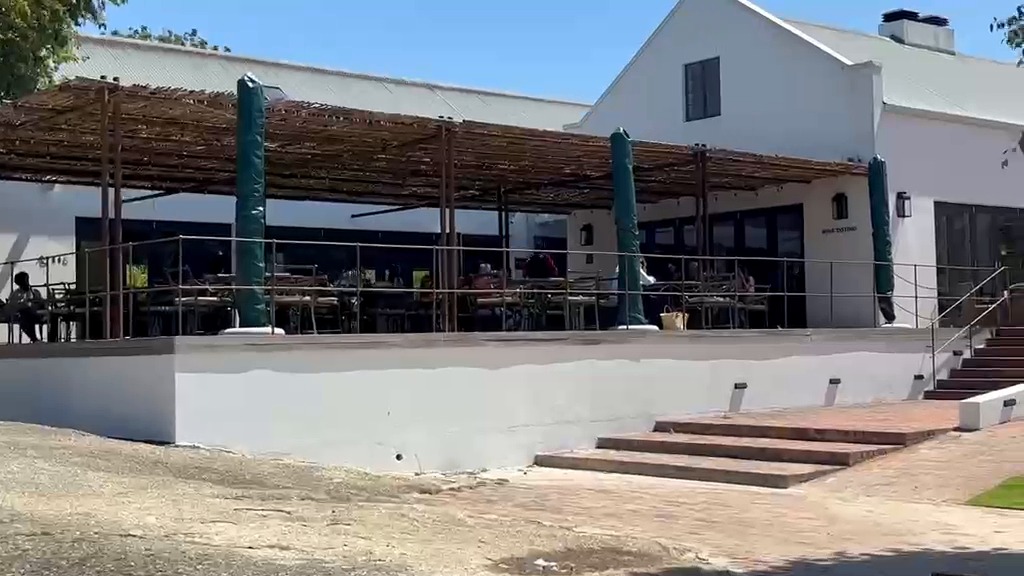
An Understated Doorway to the Tasting
You do not enter the tasting room through a grand gate or a polished wine showroom.
A white façade. Timber. A terrace. And the simple words WINE TASTING.
The place does not need to explain itself very much.
You just walk in.
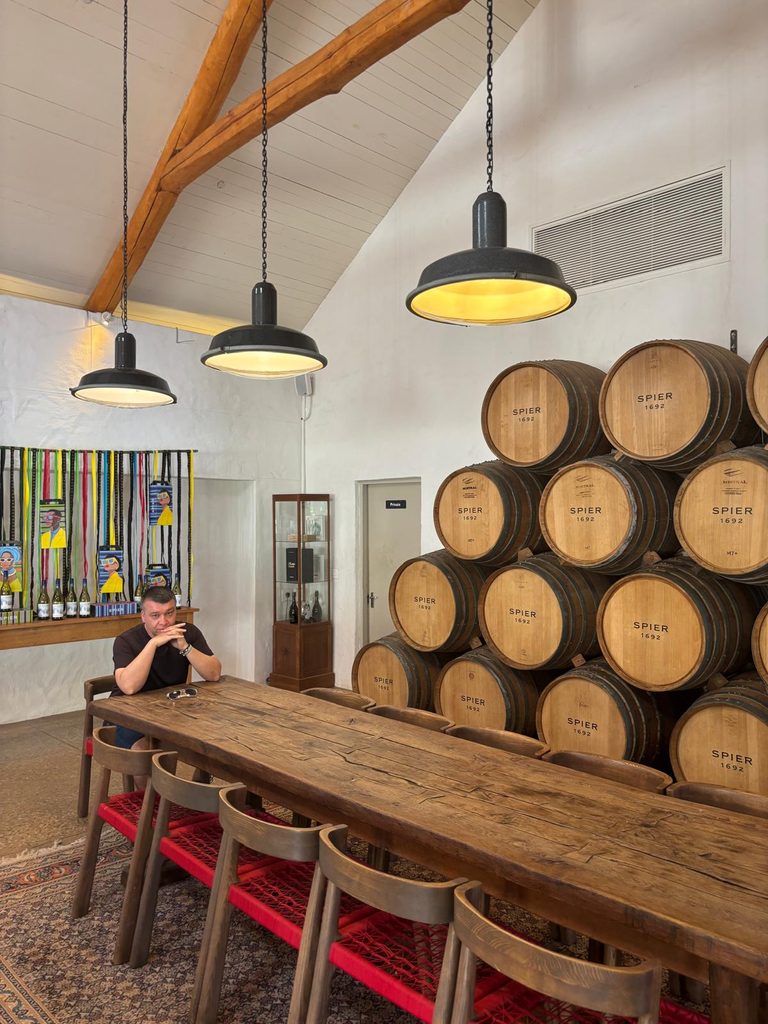
Inside, the same feeling continues.
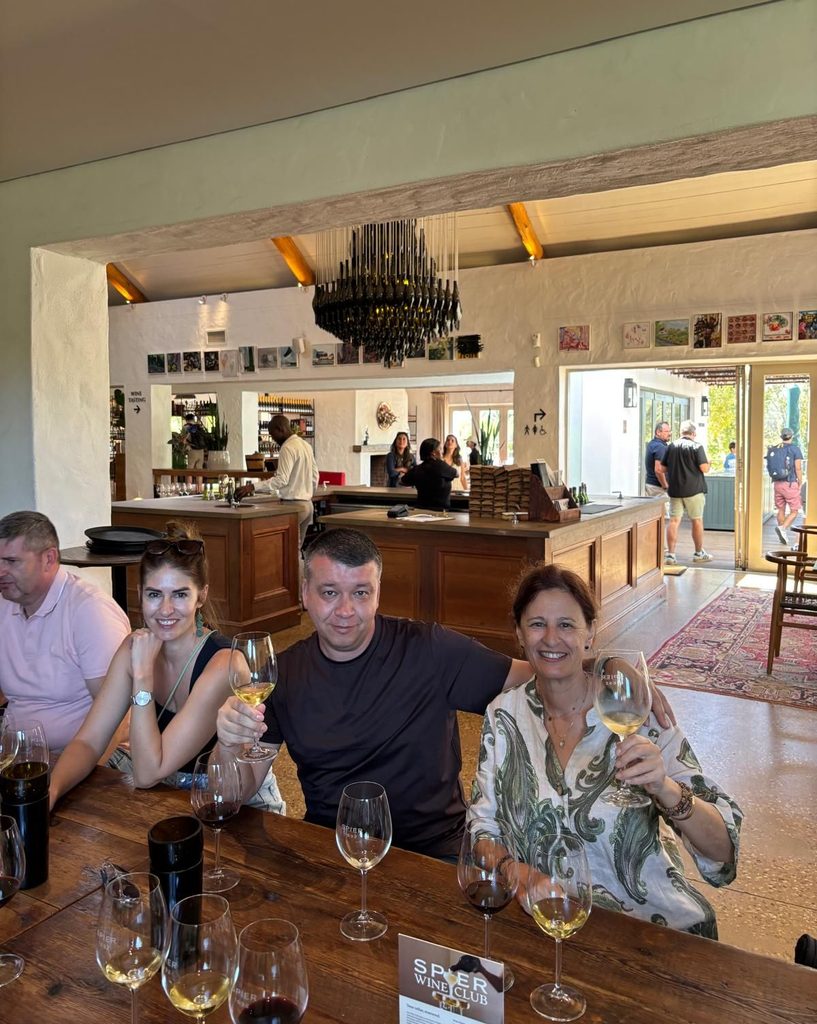
Wood, a large communal table, simple industrial lighting and barrels marked Spier 1692.
Not luxury in the form of polished surfaces.
Rather, a space that reminds you that you are still in a winery.
When Wine Is Not a Lecture
Then our tasting host arrived.
And the person on the other side of the table often determines whether you leave a tasting with a list of wines – or with a story.

This was definitely the second kind.
The wines were explained clearly, without unnecessary ceremony and without creating the impression that you need to identify fifteen different aromas in every glass before you are allowed to enjoy it.
We tasted. Compared. Asked questions.
And gradually discovered which wines interested us most.
That is also the kind of wine tasting we enjoy at TGCC.
Wine does not have to be complicated to be interesting.
Chenin Blanc – A Small South African Surprise
Among the white wines, Chenin Blanc caught my attention most.
Perhaps partly because during the tasting I found myself comparing it with wines more familiar to us in Central Europe – particularly Sauvignon Blanc.
Not because the two varieties are especially similar.
Quite the opposite.
Sauvignon can be immediately expressive, with herbal notes, citrus and lively acidity. The Chenin Blanc felt different to me – more fruit-driven, softer and sometimes broader on the palate, while still retaining enough freshness to keep everything in balance.
And comparing things that are not necessarily meant to be compared can be one of the pleasures of a tasting.
There does not always have to be a “better wine”.
Sometimes it is enough to discover another way a white wine can taste.
Then Came Pinotage
If there is one grape variety worth discovering while you are actually in South Africa, it has to be Pinotage.
Created in South Africa as a crossing of Pinot Noir and Cinsaut, the variety gradually became one of the signatures of the country’s wine culture.
In the glass, it can be more powerful than an elegant Pinot Noir – showing darker fruit, spice and, depending on the winemaking style, sometimes smoky or earthy notes.
But what interested me most was something much simpler:
it tasted like a wine that belonged here.
And when travelling for wine, that may be one of the best compliments you can give.
When Cheese Appears on the Table
Then a wooden board appeared between the glasses.
The cheeses had already been cut into, some pieces had disappeared, glasses were scattered around the table and bread sat alongside them.
No perfectly staged photograph.
Just a real tasting at exactly the right moment.
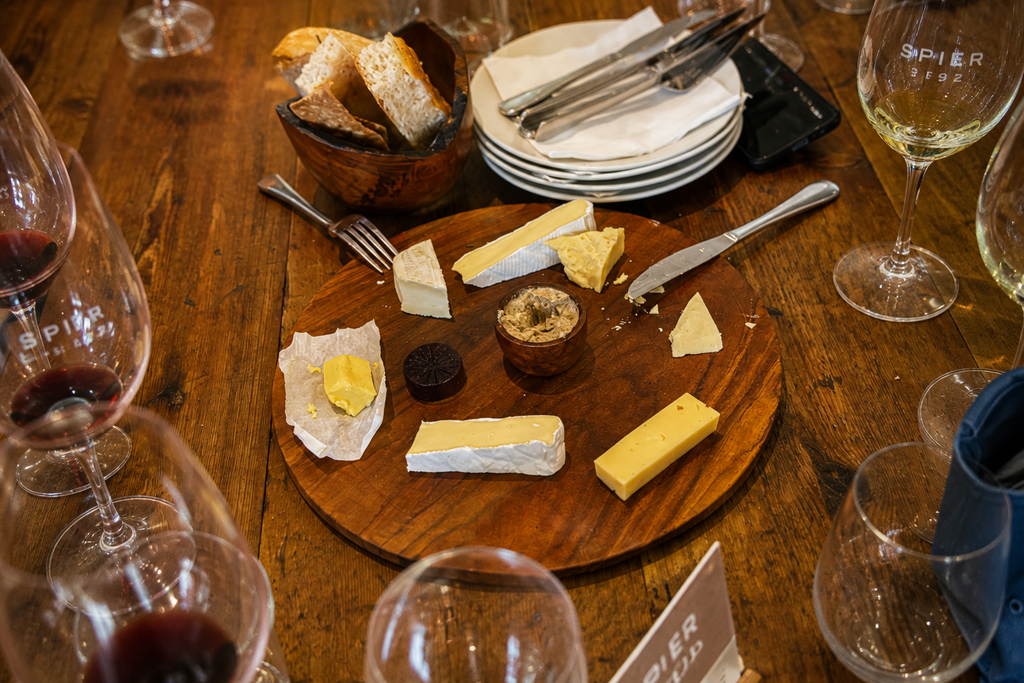
And this was where the wines began to change.
A creamier cheese could soften the perception of acidity. A stronger one could bring forward a completely different side of a wine. A piece of bread between combinations returned the palate to something closer to the starting point.
A sip.
A piece of cheese.
Another sip.
And every now and then, a small surprise when the combination you expected least suddenly worked best.
One Small Detail of a Good Tasting
There was also one subtle but very practical detail on the table – a pouring vessel made from a wine bottle.
And it serves as a reminder of one simple rule of a good wine tasting:
You don’t have to finish every glass.
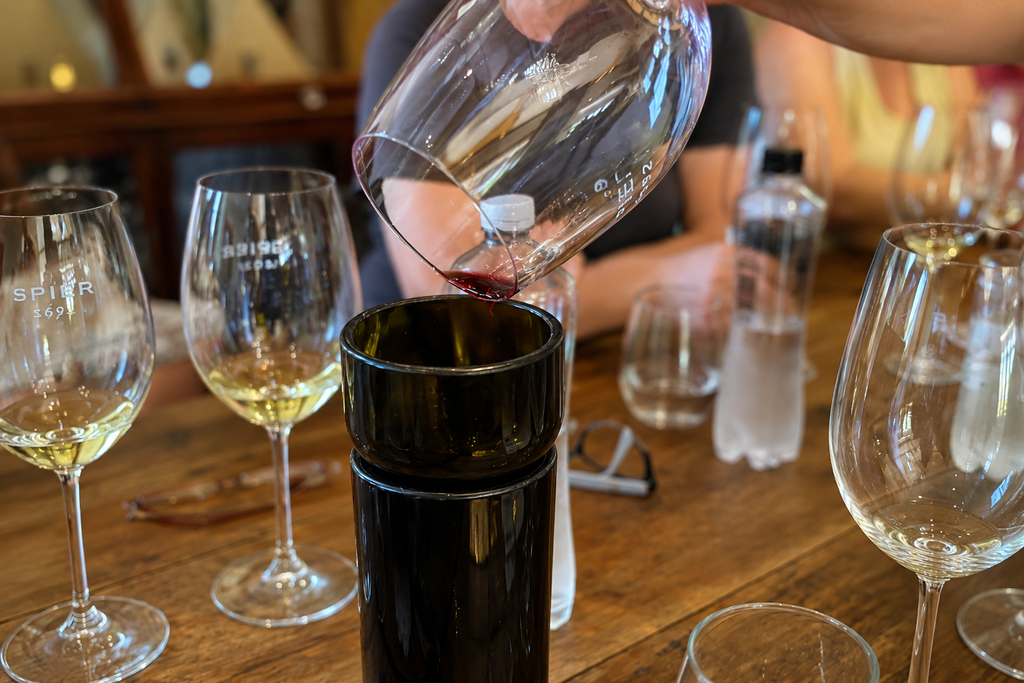
You taste the wine, think about it, compare it with the others – and you can simply pour away what remains.
When tasting several wines, that is not only perfectly normal.
It is sensible.
A wine tasting is not a drinking competition.
It is a way of getting to know wine.
And sometimes two or three sips are all you need.
The Table at the End of a Tasting
At the beginning, the glasses tend to stand neatly in line.
By the end, the table is telling its own story.
A little white wine remains in one glass, red in another. The last piece of cheese sits on the wooden board. The bread has been broken apart, and everyone around the table already knows which wine they would happily taste once more.
This is one of the things we love about travelling for wine.
The wine stops being a product with a label.
It becomes part of the conversation.
And Then, Just Step Outside
After a tasting at Spier, it would be a shame to get straight into the car.
The estate itself feels almost like the second half of the experience.
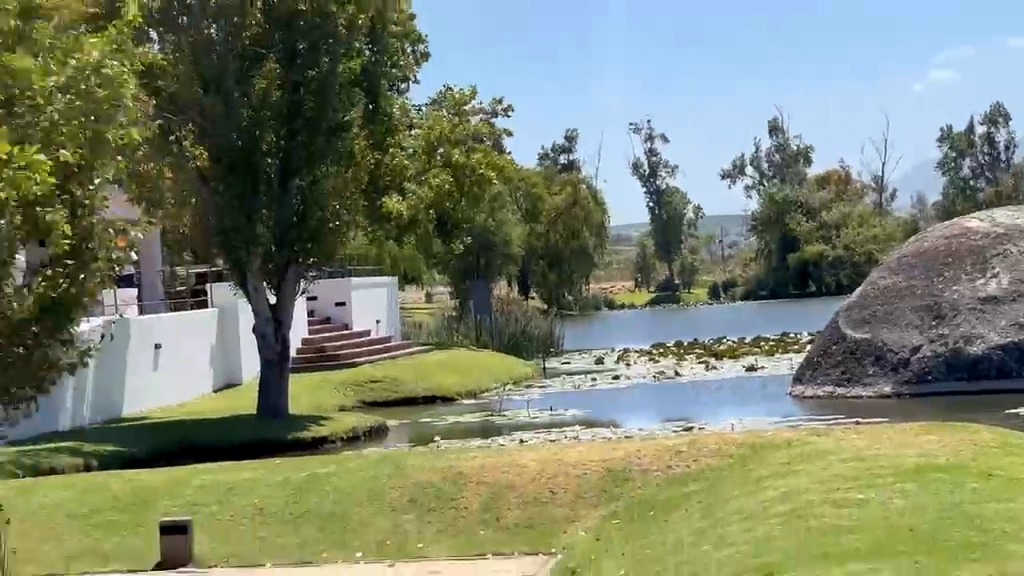
Water, reeds, enormous trees, lawns, shade and mountains in the distance create a completely different atmosphere from the tasting room.
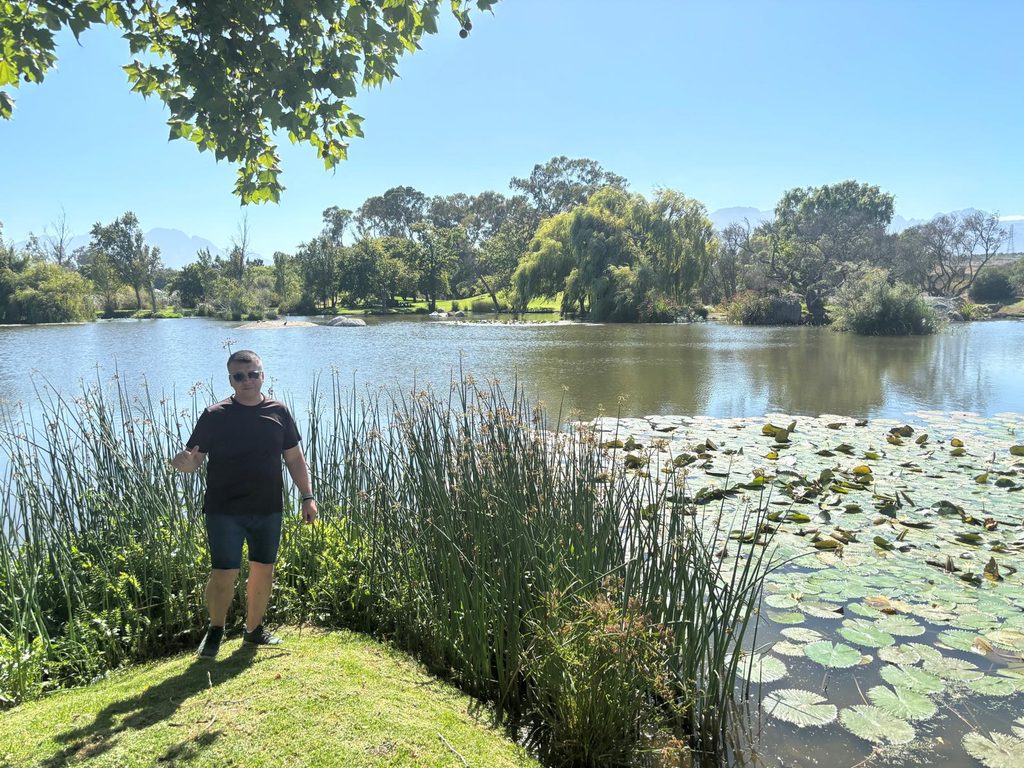
After several wines, it is actually the perfect continuation of a tasting.
Take a walk.
Let the flavours slowly fade.
And allow the place itself to settle into your memory.
Not simply as another winery we visited.
But as one particularly good afternoon in Stellenbosch.
What Stayed With Us from Spier
When you look back at a place like this some time later, you rarely remember every wine that was poured into your glass.
Instead, individual images remain.
A Chenin Blanc that made you stop and compare.
A Pinotage that tasted unmistakably South African.
A wooden table filled with glasses.
Cheese between them.
A tasting host who knew how to talk about wine without turning it into a science lesson.
And outside the door, the lake, the trees and Stellenbosch.
Perhaps that is why we travel for wine in the first place.
Not only for what is in the glass, but for the places that come alive around it.