
Engebret Café – 30,000 Steps to a Taste of Norway
An evening at one of Oslo’s most historic restaurants, an incredibly juicy reindeer steak, and ice cream made from cheese. Sometimes the best food experiences begin with a very long walk.
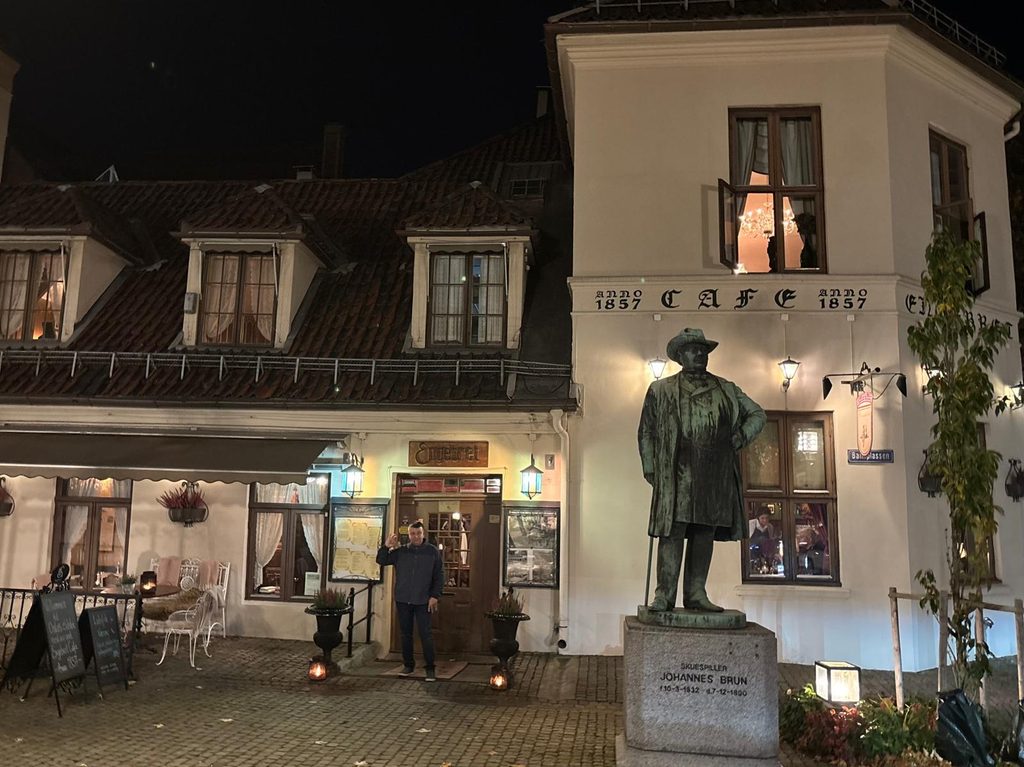
Engebret Café – a historic Oslo restaurant welcoming guests since 1857.
A Dinner We Had Definitely Earned
Thirty thousand steps. Akershus Fortress, the Royal Palace, the Oslo Opera House, the MUNCH Museum, and one completely innocent visit to Oslo City shopping centre.
By the time my daughter and I arrived at Engebret Café on Saturday evening, we had explored a good part of Oslo. And we were more than ready for a well-deserved dinner.
We had chosen one of the city’s most historic dining addresses. Established in 1857, Engebret Café is considered Oslo’s oldest restaurant still in operation.
Located at Bankplassen, in the historic heart of the city and just a short walk from Akershus Fortress, the restaurant has a particularly lovely setting in autumn. Old buildings, cobblestone streets, warm streetlights, and a welcome sense of calm after a busy day exploring the city.
Outside stands a statue of the Norwegian actor Johannes Brun. Even before entering, you get the feeling that this place has quite a few stories to tell.
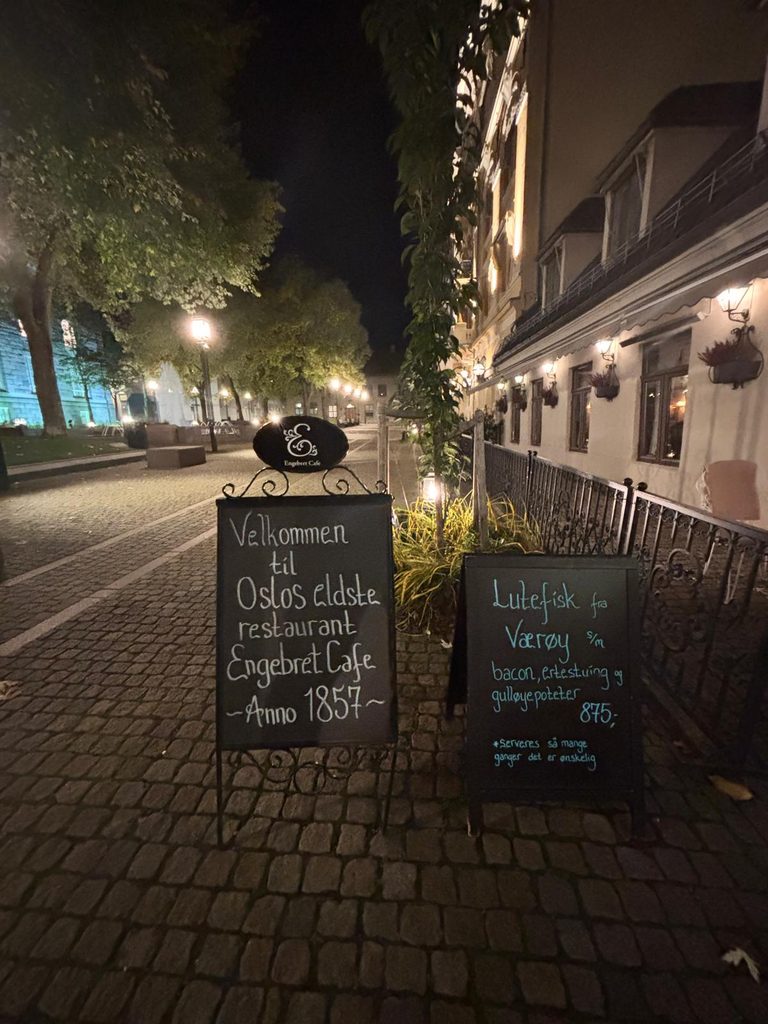
An autumn evening at Bankplassen, where Oslo’s historic streets create a lovely setting for dinner.
History That Still Feels Alive
Inside, Engebret Café feels traditional without feeling like a museum.
Dark wooden interiors, paintings on the walls, white tablecloths, candles, and beautifully set tables create the atmosphere of a classic European restaurant.
And when you discover that Henrik Ibsen, Edvard Grieg, and Edvard Munch were among its famous guests, the history suddenly feels a little more personal.
Especially when, just a few hours earlier, we had been admiring Munch’s paintings at his museum.
The staff were friendly and professional, without being overly formal. The restaurant was full of guests, and as we looked around, we noticed one small detail: almost every table had a glass of wine.
A good sign.
Engebret is not somewhere I would recommend visiting on a Saturday evening without a reservation. It is a popular restaurant, and booking ahead is definitely a good idea if you want to avoid disappointment.
But the real reason for our visit was, of course, waiting on the menu.
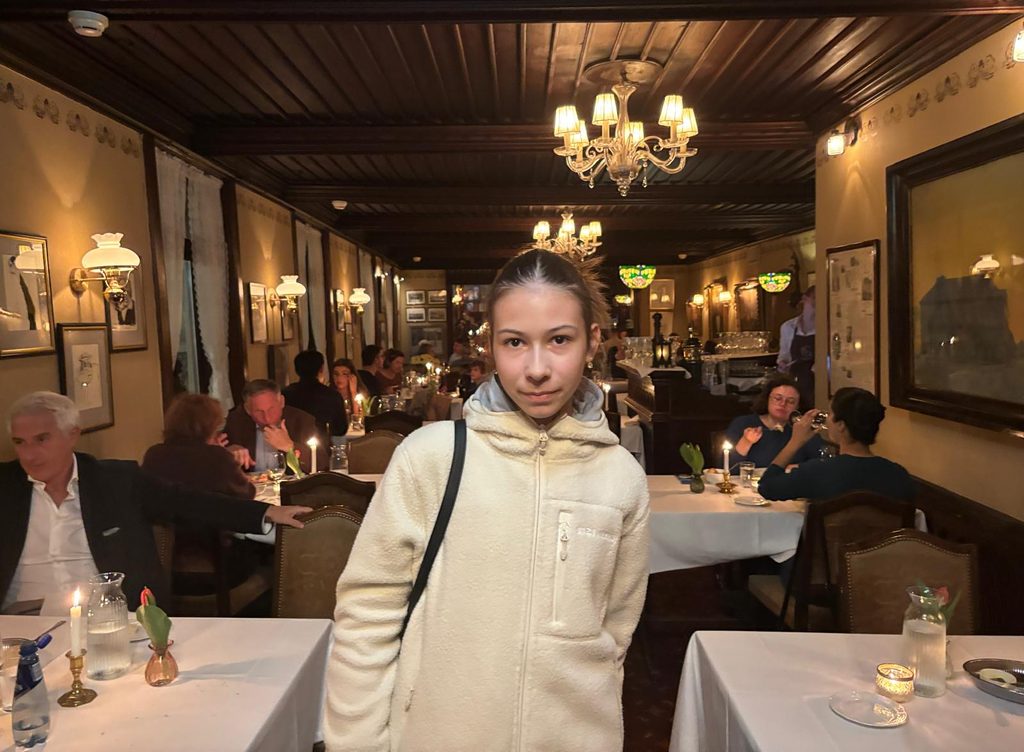
The traditional interior of Engebret Café, with wooden ceilings, historic paintings, and warm candlelight.
Reindeer, Lingonberries, and a Taste of the Norwegian Forest
The menu is wonderfully Scandinavian.
Fresh fish, Arctic halibut, king crab, lamb, and game all have their place here. But for us, the choice was surprisingly easy.
Reinsdyrbiff – reindeer steak.
Not exactly something we come across every day in Central Europe.
The steak was served with sautéed chanterelle mushrooms, celeriac purée, Brussels sprouts, lingonberries, game sauce with reindeer tongue, and fried potatoes.
Even the combination of ingredients suggested that this would be quite different from the steaks we were used to.
The biggest surprise was the meat itself.
The reindeer steak was incredibly juicy, and its game flavour was much milder than we had expected. Nothing was overpowering, and everything on the plate worked beautifully together.
The chanterelle mushrooms brought a pleasant, earthy flavour, while the lingonberries added a little tartness. The smooth celeriac purée softened the combination and brought the different flavours together.
That was what impressed us most. Every ingredient had its place, and nothing competed for attention.
The Brussels sprouts added a fresh, slightly bitter note, while the rich game sauce, prepared with reindeer tongue, gave the dish a deeper flavour.
There is something interesting about the way Norwegian cuisine combines game with berries and wild mushrooms.
Lingonberries are not simply a colourful garnish. Their natural tartness balances the richness of the meat and sauce, while the mushrooms add the familiar flavours of the forest.
It is a combination that makes perfect sense once you taste it.
For us, it was a completely different experience of game meat from what we usually know in Central European cooking.
And one of those meals that reminds you that a memorable dish is not just about an unusual ingredient. It is about how well everything is prepared.
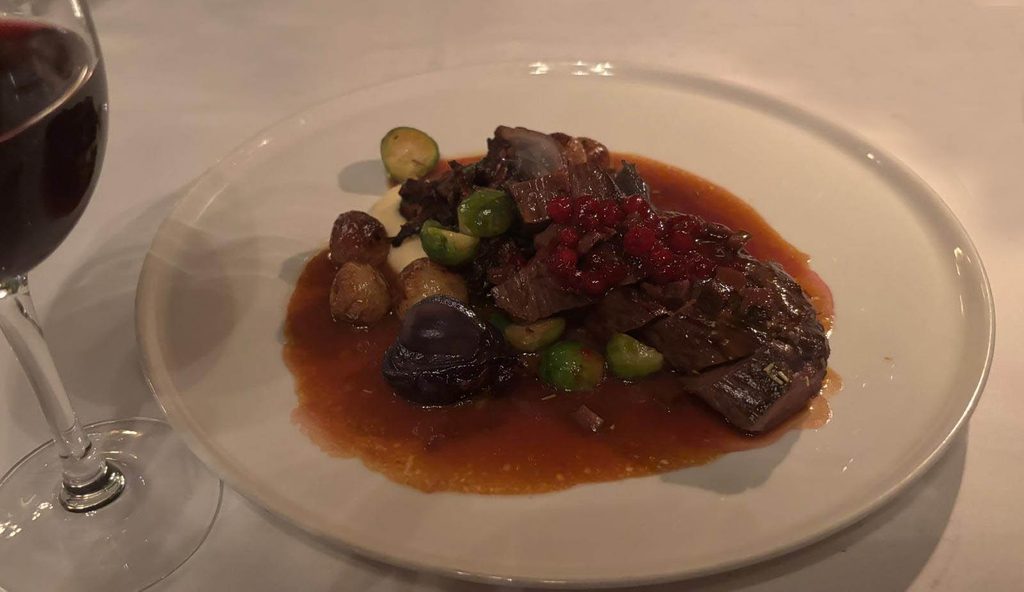
Reindeer steak with chanterelle mushrooms, lingonberries, celeriac purée, Brussels sprouts, and game sauce with reindeer tongue – the highlight of our evening.
When Cheese Becomes Ice Cream
After the reindeer steak, we decided that if we were exploring Norwegian flavours, we might as well continue with dessert.
Brunost ice cream.
Ice cream made from traditional Norwegian brown cheese, served with sour cream and a crispy wafer.
Brunost is a Norwegian speciality made from whey, which develops its characteristic brown colour and slightly sweet, caramel-like flavour during slow heating. Despite its name, it is not a traditional aged cheese.
Ice cream made from it?
We simply had to try it.
It came with sour cream and a crispy Norwegian wafer called krumkake.
An unusual combination, certainly, but exactly the kind of discovery we enjoy when travelling.
After all, when else would you try ice cream made from cheese, if not in Norway?
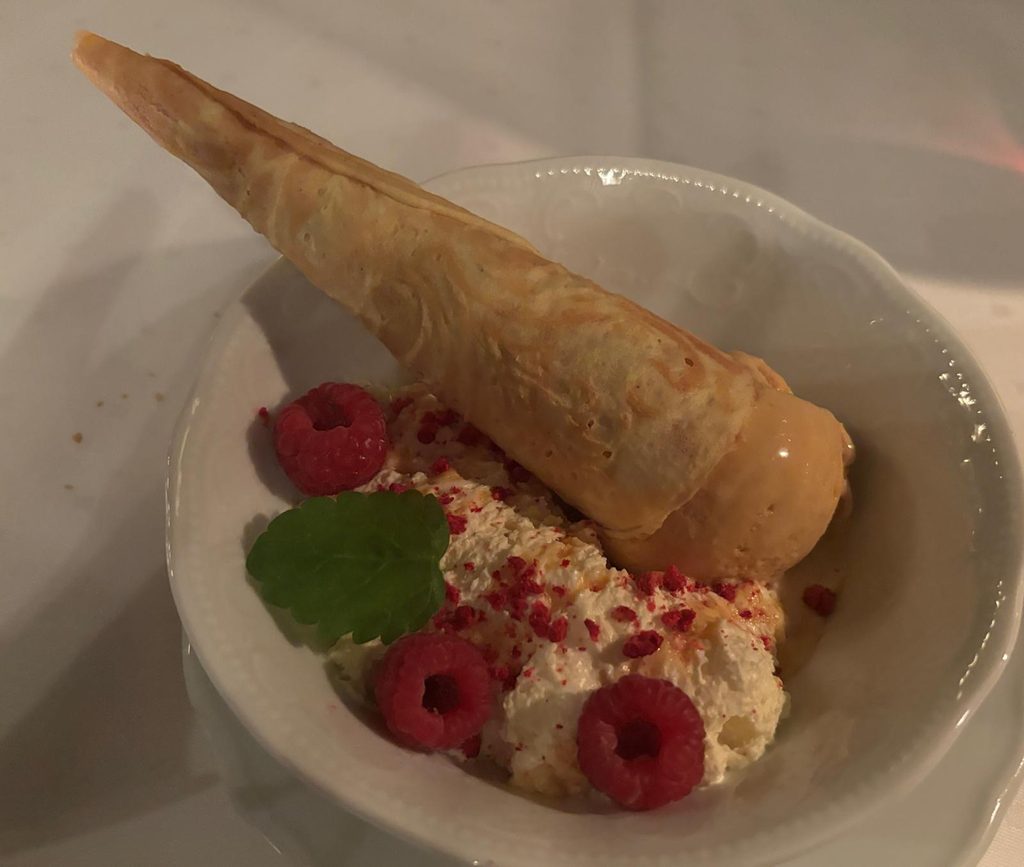
Brunost ice cream – a Norwegian dessert made with traditional brown cheese, served with sour cream and a crispy wafer.
A Different Taste of Oslo
Engebret Café is not a place you visit to discover the latest food trends.
Its charm lies in something else: traditional Norwegian ingredients, carefully prepared and served in an elegant but welcoming setting.
If you are visiting Oslo and want to try something beyond the familiar Norwegian salmon, reindeer steak is an excellent choice.
And if you enjoy unusual desserts, brunost ice cream is certainly worth trying.
Our dinner was the perfect ending to a day spent exploring the city.
It was also a lovely reminder that travelling is not only about famous landmarks and museums. Sometimes, a single meal can tell you quite a lot about a country.
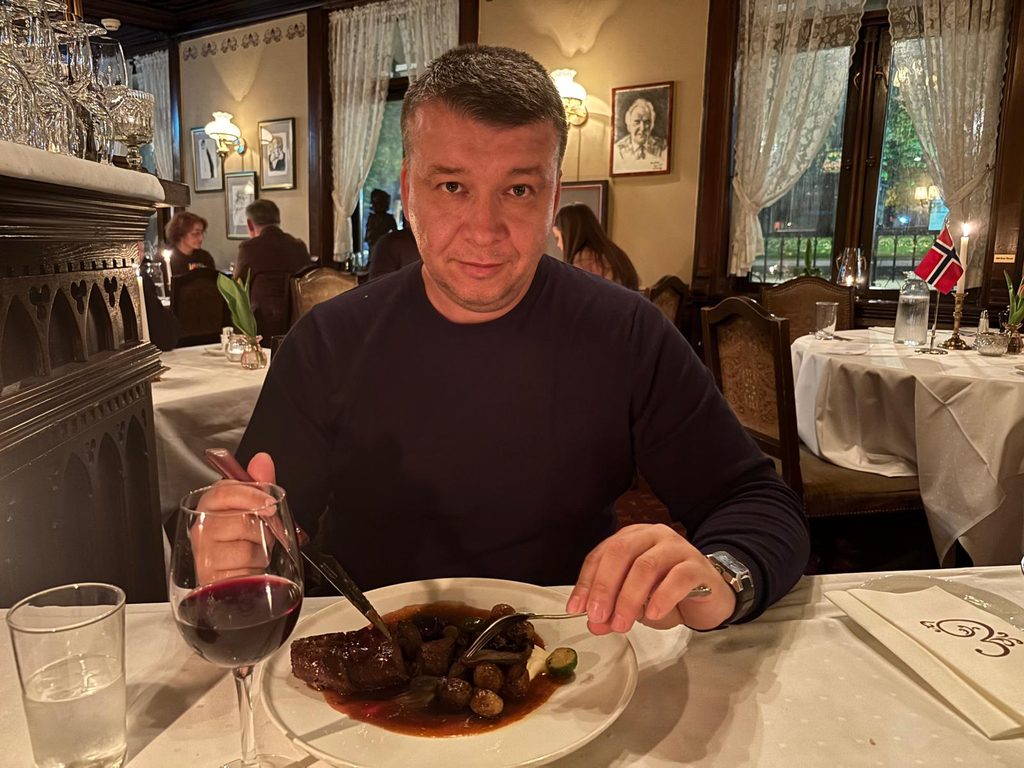
A well-deserved dinner after a full day exploring Oslo.
After thirty thousand steps, we agreed that this was probably the best stop of the entire day.
Although Oslo City shopping centre might have a different opinion.
One detail caught my attention – an old, beautifully decorated stove standing quietly in one of the restaurant’s alcoves.
It immediately reminded me of another restaurant, much closer to home: MEDZI MÚRMI in Trnava, Slovakia, where I had noticed a remarkably similar historic stove.
Two restaurants, two countries, and two very different dining experiences. Yet sometimes it is a small detail like this that makes you remember a place.
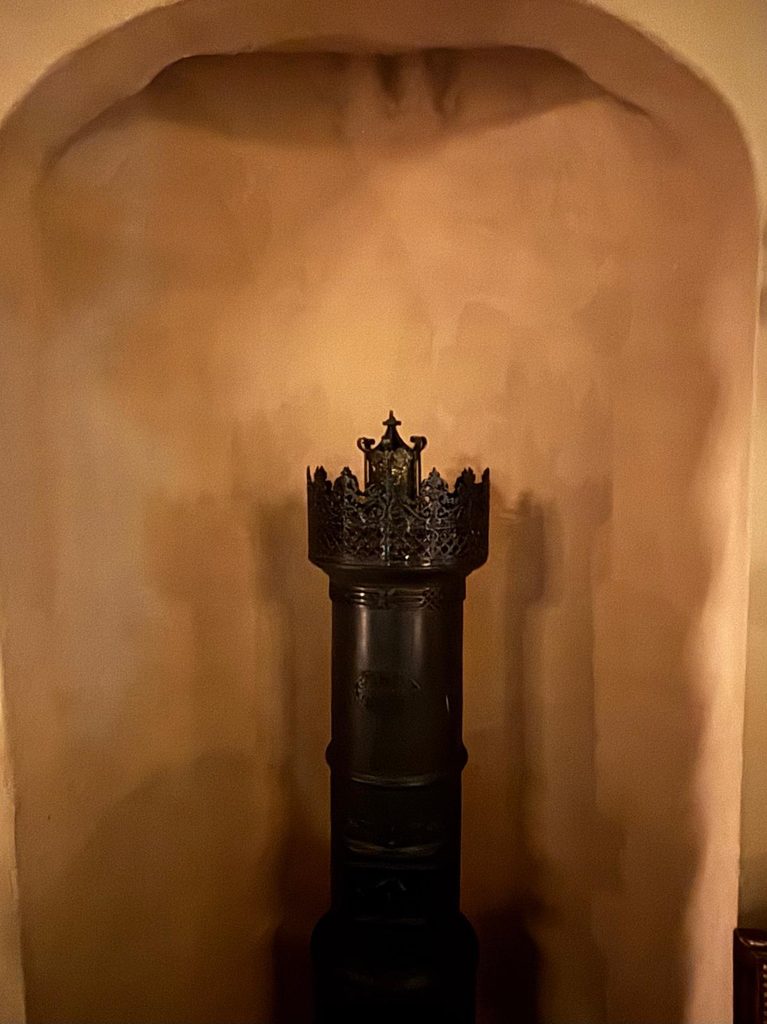
An ornate historic stove at Engebret Café – a small detail that brought back memories of another restaurant in Trnava.