
Casa Ibérica Bratislava: A Taste of Spain in the Heart of the City
Sometimes you can walk past a place many times without ever knowing what is really hiding behind its doors.
Casa Ibérica in the centre of Bratislava is one of those places.
At first glance, it is a Spanish gourmet shop. Shelves filled with wine, olive oil, jamón, cheese and other Iberian delicacies make you more likely to take a little piece of Spain home than to sit down for lunch.
But Casa Ibérica has another, less obvious side.
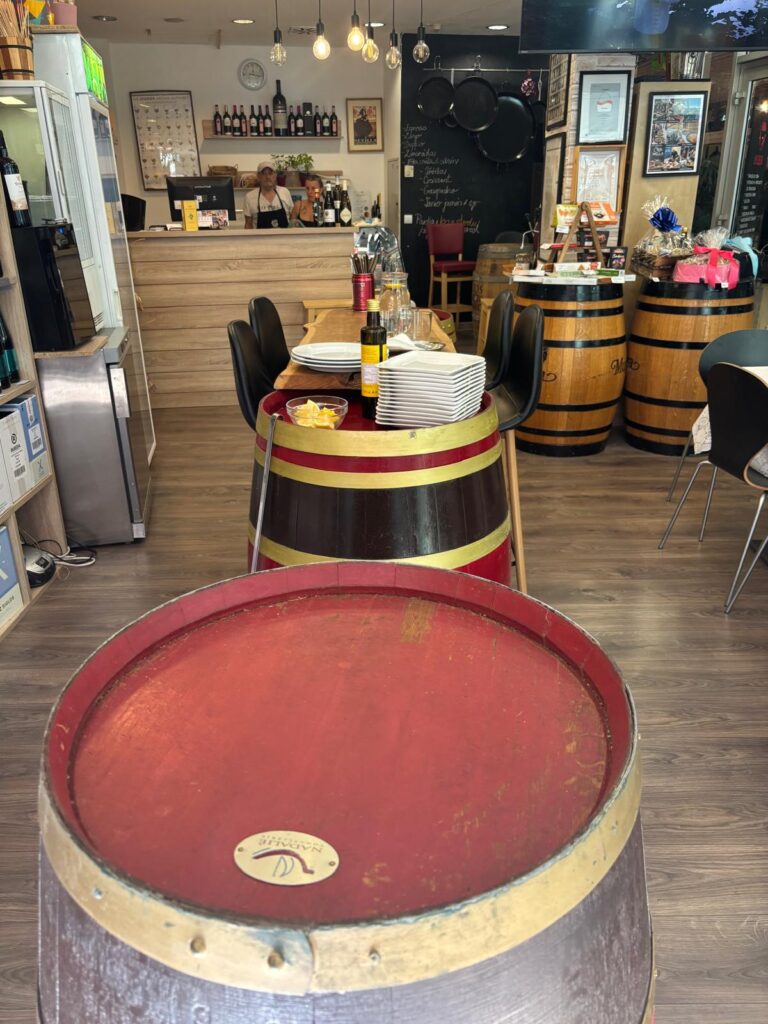
By prior arrangement, they can prepare lunch for a group or a work team. And suddenly, a gourmet shop turns into a small dining room somewhere between Bratislava and Valencia.
That is exactly how we discovered it this time.
When a Gourmet Shop Becomes a Dining Room
Water with lemon was already waiting for us on the table as part of the lunch. A small detail, perhaps, but still not something you can take for granted everywhere in central Bratislava.
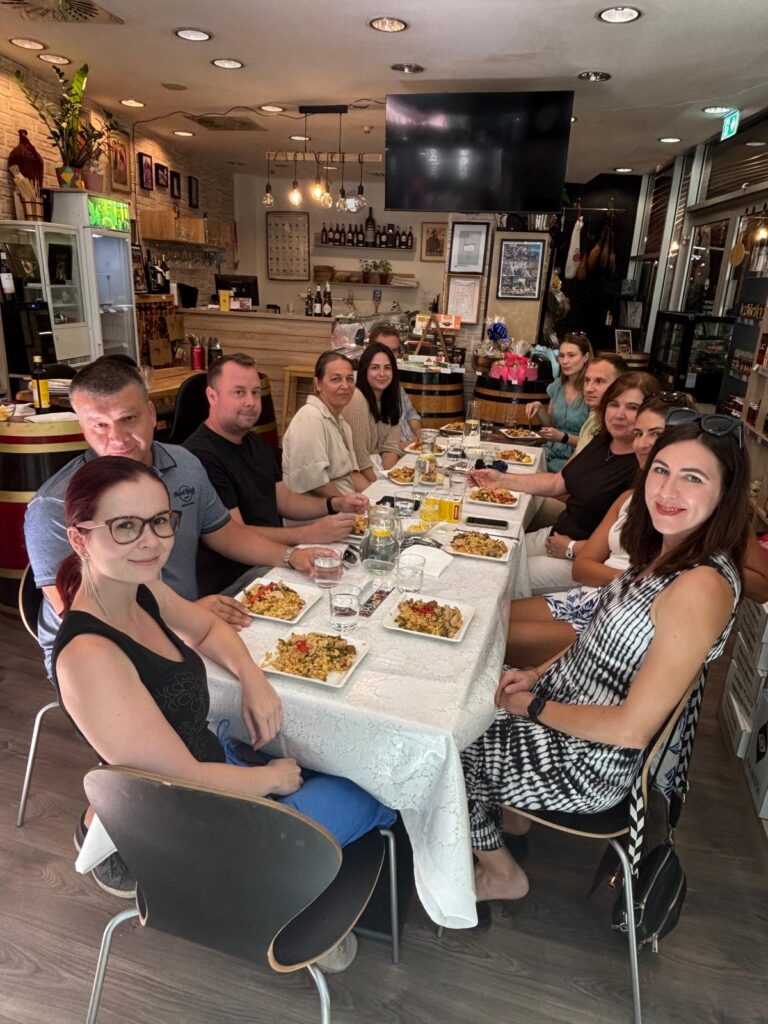
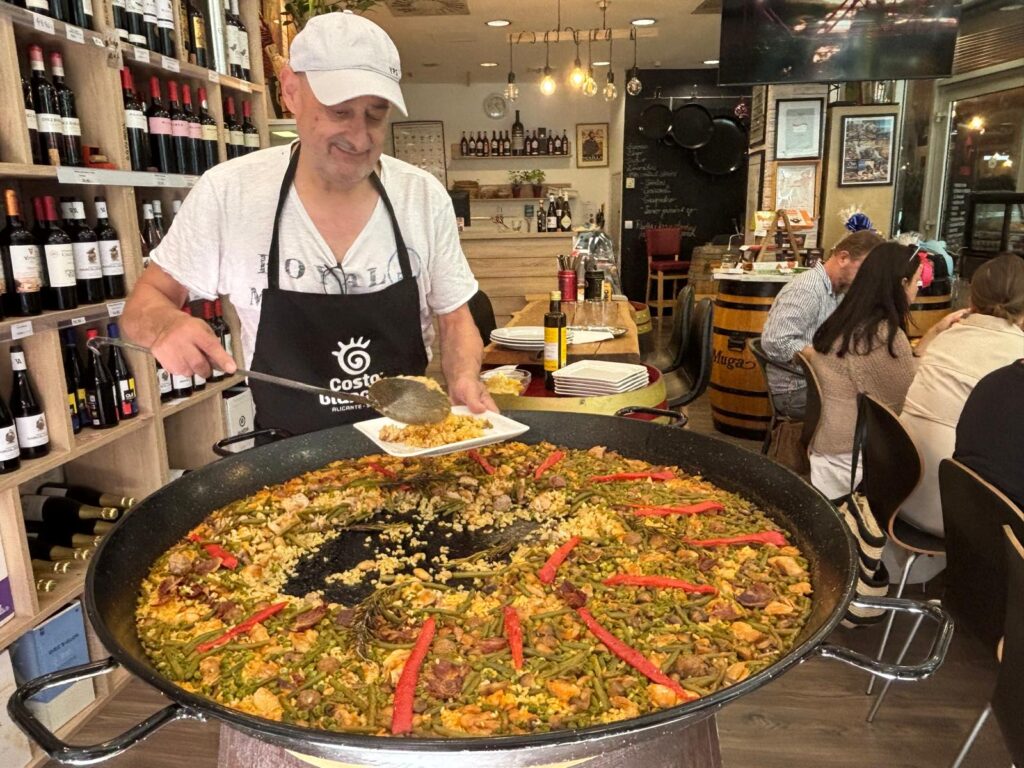
The real attraction, however, was standing right next to us – a huge pan of paella, from which the chef gradually served everyone around the table.
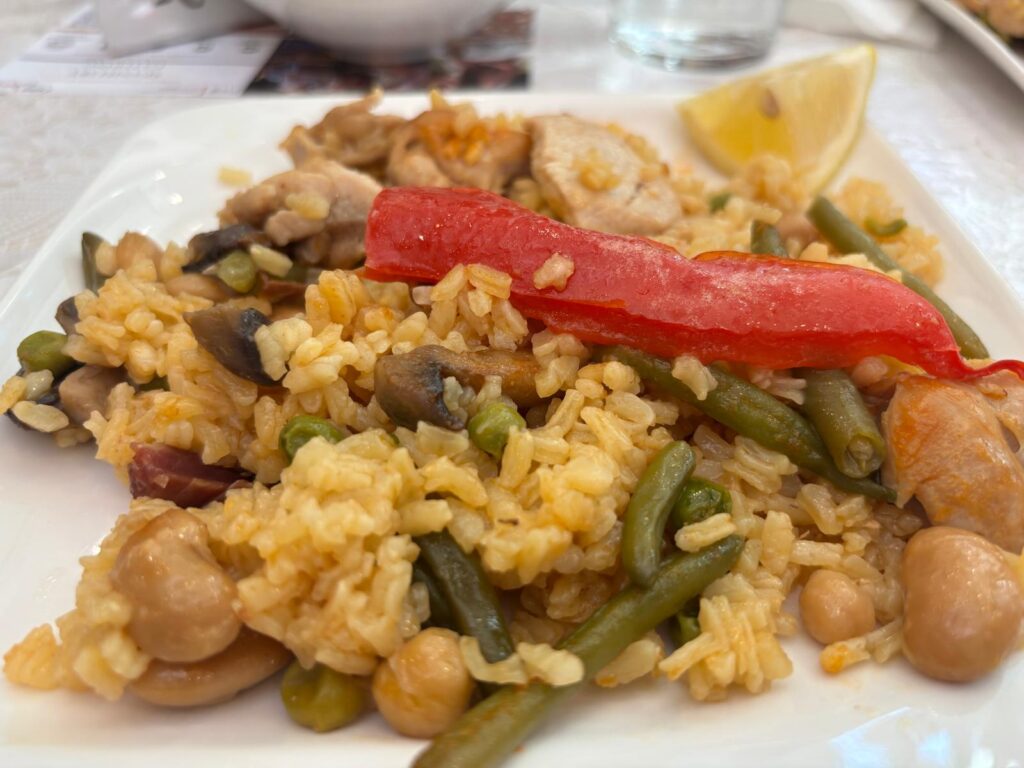
This version was prepared with rice, chicken, mushrooms, green beans, legumes, vegetables and red pepper. A relatively simple combination, but very nicely balanced and full of flavour.
And then we learned something that added an extra touch of authenticity:
the chef himself comes from Valencia.
Why Does Valencia Matter When We Talk About Paella?
Because although paella has become one of the great symbols of Spanish cuisine, its true home is Valencia and the area around the Albufera lagoon, where rice cultivation has a centuries-old tradition.
And perhaps surprisingly, traditional Valencian paella does not have to contain seafood at all.
Classic paella valenciana is traditionally based on rice, chicken and rabbit, green beans and the distinctive large local bean known as garrofó. Seafood versions belong to another branch of Spanish rice dishes and have become enormously popular around the world.
Paella was not created as a luxury dish. Its roots are much more rustic – rice and locally available ingredients cooked together in one large pan. Over time, it became closely associated with gatherings of family and friends.
And that was exactly the character of our Bratislava version:
one huge paella and one table shared by everyone.
“Pakito?”
Our chef was not only very good at his craft, but also genuinely friendly. Every now and then, he would walk around the table and offer another helping with a single question:
“Pakito?”
Whether this was his cheerful version of the Spanish poquito – “a little” – or our crash course in Spanish simply wasn’t fully accredited, we understood the meaning immediately.
A little more?
Let’s just say that poquito was one of the Spanish words we learned very quickly.
And What About the Wine?
There is one undeniable advantage to having lunch in the middle of a gourmet shop surrounded by Spanish wines:
the pairing is literally within arm’s reach.
With our paella, we were recommended Dominio de Calles Crianza 2022 from Vegamar.
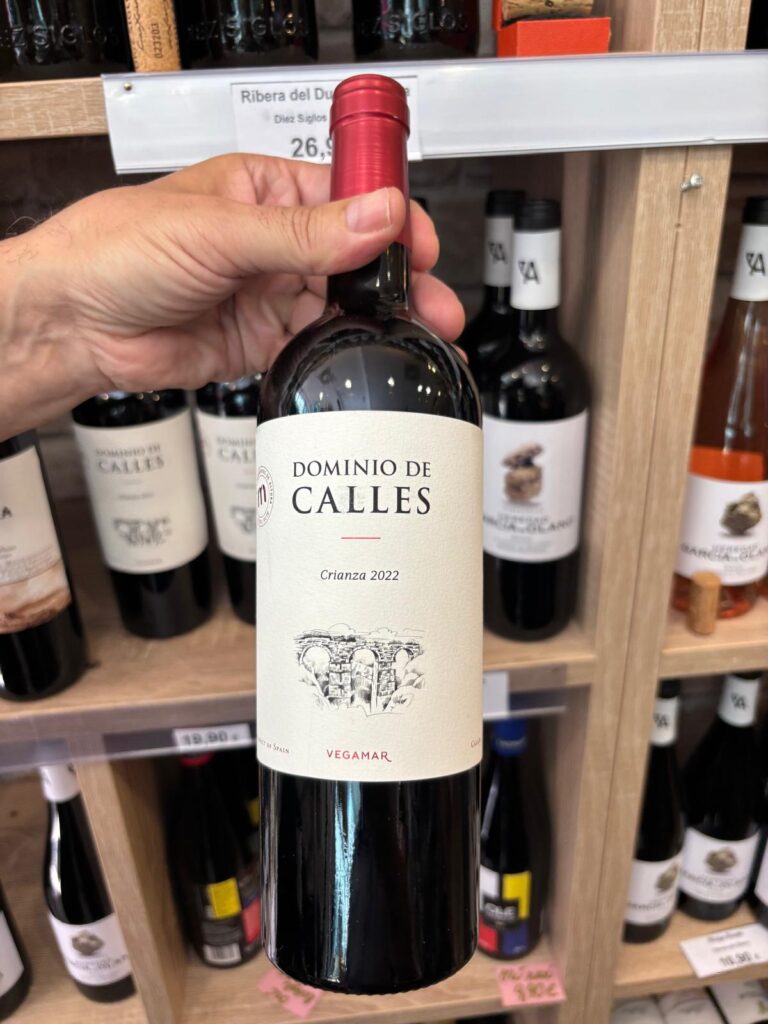
Red wine with paella may sound slightly surprising at first. But with a version containing chicken, mushrooms, legumes and deeper roasted flavours, a medium-bodied red with softer tannins can work remarkably well.
Dominio de Calles Crianza is based primarily on Tempranillo, complemented by Cabernet Sauvignon, Merlot and Syrah. It offers ripe fruit, gentle spicy and woody notes, and enough structure to accompany the meat and mushrooms without overpowering the rice.
And there is another nice connection:
Vegamar is a Valencian winery.
So we had a Valencian chef, a Valencia-inspired paella and a wine from the same region.
Sometimes there is no need to overcomplicate food and wine pairing. When eating a regional dish, the wines produced nearby are often a very good place to start.
Casa Ibérica Has Another Side
It was only during our visit that we realised that the description “gourmet shop” does not quite tell the whole story of Casa Ibérica.
Alongside Spanish delicacies and wines, they can arrange group lunches like ours and also bring the concept outside their own premises through Spanish catering and private events, combining traditional food with wine, Cava and the necessary service.
It is an interesting alternative to conventional catering.
Sometimes, instead of asking:
“What should we order?”
you can simply say:
“Let’s do Spain this time.”
Next Time, Seafood
At the end of lunch, the chef made us one more promise:
next time, seafood paella.
And just to make sure our future visit qualifies as serious culinary research, a traditional Spanish dessert should probably be included as well.
So the sequel is practically agreed.
But perhaps the best review of today’s lunch can be found in one final photograph.
At the beginning, the pan was full.
At the end, only a few grains of rice remained.
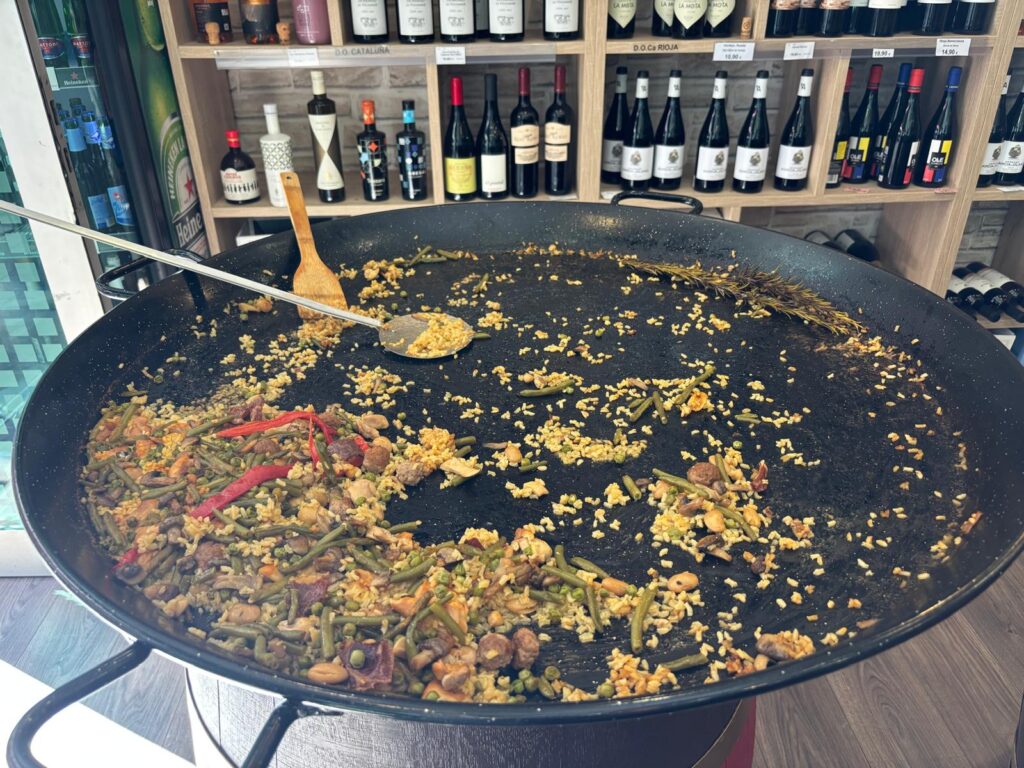
Some reviews are written by guests. Others are written by an empty pan.